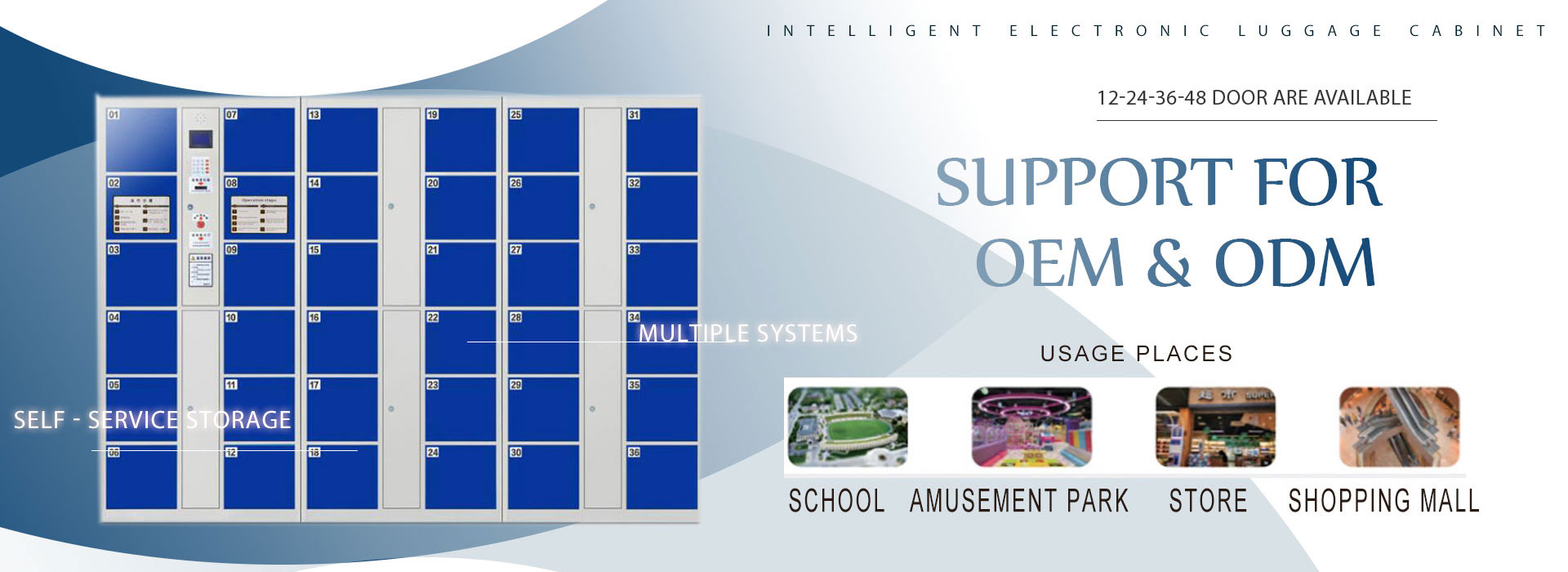
A school does not buy lockers once. It runs them, year after year, and the cost of running a keyed bank is concentrated in four weeks of the calendar: the first week of term, the week the keys start disappearing, the week somebody re-keys a bank, and the week before the summer clear-out.
Digital lockers do not remove those weeks. They move the work from a caretaker’s hands to a screen, which is a different kind of saving and worth counting properly before anybody signs.
One academic year, as it actually runs
- September. Every new intake needs a key. Two hundred keys, two hundred names, and a list that is already out of date by the second week because three students moved classes.
- October. The first lost keys. The office has no spare, so either a door stays unlocked or somebody cuts a new key.
- December. A key is reported lost and not found. The choice is to re-key the bank, which is a purchase order, or to accept that one compartment is effectively public.
- March. Half the bank is being used as a general cupboard because nobody remembers which key belongs to which door.
- June. Clear-out. Anything left inside gets bagged and stored, because there is no record of who had which compartment.
None of those are dramatic. Together they are the reason PE departments stop trusting the locker bank and start letting students leave bags in the equipment room.
The four costs, and how to estimate them
| Cost | What it looks like | How to size it |
|---|---|---|
| Key issue | Term-start queue at the office, staff time per student | Minutes per student × intake |
| Lost keys | Cutting replacements, unlocking doors, disputes | Replacements per term × staff minutes |
| Re-keying | A cylinder change after a reported loss | Events per year × the order each one needs |
| Clearing out | Bagging unclaimed contents, no record of owners | Days per year of caretaking time |
The first two are visible and usually underestimated. The third is the one that gets a project approved, because a single re-key after a lost master is a line item a bursar can point at.
What the digital side changes
- Issue moves to enrolment. A student is registered once — card, code or fingerprint — and that is the end of the term-start queue.
- A lost credential is a two-minute job. Deactivate, reissue, done. No cylinder, no key cutting, no purchase order.
- There is a record. Which credential opened which compartment, and when. The June clear-out stops being guesswork.
- Compartments can be reassigned. A class changes room, a bank gets reallocated, and nobody has to collect keys first.

Which credential suits a school
Three options, and the choice is really about how much staff time the school has at the start of term.
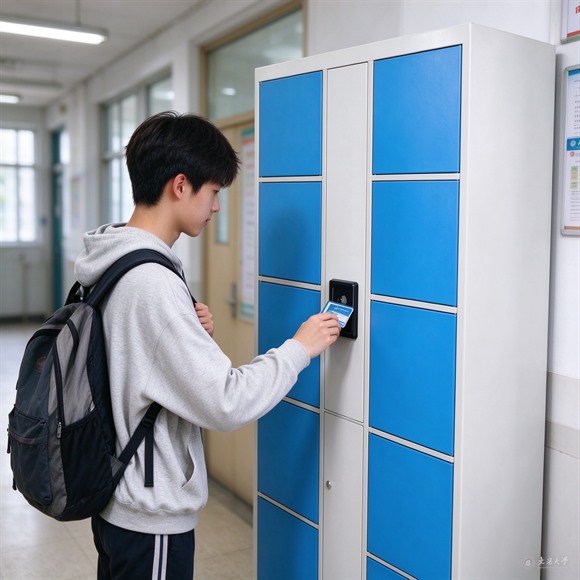
- Student card. Works where the school already issues ID cards for the library or canteen. Nothing new to hand out, and the card is already the student’s responsibility.
- Self-set code. No card, no enrolment queue beyond a slip of paper. Works well for visiting groups and for schools that do not issue cards to every year group.
- Fingerprint or face. Fast, nothing to lose, and the right answer where the bank is in a changing room and cards get left in bags. The cost is enrolment: every student, every September, at a desk.
Many schools run a mixed bank for exactly this reason — cards for the students who have them, a code or slip for everybody else. The lock types and what each one needs are compared in electronic lockers for public sites.
Door count: classrooms are not gyms
Two patterns dominate. A PE or sports block has short, hard peaks — a whole year group changes within twenty minutes — and needs doors against that twenty minutes, not against the school roll.
A corridor bank for bags and instruments runs all day at low occupancy, and a smaller bank covers it. Getting this wrong is expensive in both directions: too few doors in the sports hall creates a queue that PE teachers solve by abandoning the lockers, and too many in a corridor leaves a bank that is 20% used and looks like a mistake.
The arithmetic for a peak is straightforward and worth doing with the school’s own timetable: arrivals in the busiest twenty minutes × share needing storage × minutes inside ÷ twenty. The method, with four numbers that can be counted in a week, is in how self-service lockers cut waiting time.
The physical side
- Twelve doors per body, 850 mm wide, 1800 high, 460 deep; a bank is two to four bodies.
- One earthed socket per bank. No network connection required.
- A flat floor and a wall. No plinth, no anchor bolts.
- A metre of clear floor in front, which is the number a corridor survey usually misses.
What year two looks like on the staff side
The first year is the pilot. The second year is when a school finds out whether the routine survived the people who set it up.
- September has no queue. Enrolment moves to the IT room or the library desk, and the office stops issuing keys entirely.
- Departures are quiet. A leaver’s credential is deleted when the card is collected, which is a step in a process schools already run.
- The bank stays full. The failure mode in year two is not breakage, it is a bank that is 20% used because the new year group was never shown where it is.
What to put in the tender document
Three lines stop most of the ambiguity that makes locker tenders come back incomparable:
- The door count, or the peak changeover figure the count is to be derived from.
- The credential type, including what happens to a student who has no card.
- The delivery condition: assembled bodies, or flat-packed panels for assembly on site.
Specifications
| Item | Value |
|---|---|
| Doors | 12 / 24 / 36 / 48, in bodies of 12 |
| Body size | H1800 × W850 × D460 mm |
| Single door | W270 × H300 × D460 mm |
| Access | Student card, self-set code, fingerprint or face |
| Colours | White body with sky blue, police blue, orange-red or fruit green doors |
| Power | One earthed socket |
| Network | Not required |
What a school should bring to the quote
- The busiest twenty minutes of a PE changeover, and how many students are in it.
- Whether ID cards are already issued to every year group.
- Who will run enrolment in September, and where.
- The corridor or changing room photo, including the socket and the floor space in front.
The bank size and the finish come back with the quotation. The four costs above are worth putting on one sheet first, because they are what the decision actually rests on.
The alternative approach to the same problem is set out in barcode lockers for schools.