
Every gym owner has dealt with this: members complain about locker smells, and no amount of cleaning seems to fix it.
The problem isn’t the cleaning routine — it’s the locker itself. Standard enclosed lockers trap air inside. Wet clothes and sweaty shoes sitting for hours? That’s a breeding ground for bacteria and mold.
That’s why more and more fitness centers are making ventilation a must-have feature when buying lockers — not just a nice-to-have.
The Real Cause of Locker Room Odors
To understand why ventilation works, you need to understand the problem first.
Here’s what’s typically inside a gym bag:
- Running shoes covered in sweat
- Workout clothes still damp
- Towels that haven’t fully dried
- Yoga mats and gear
Put all that in a sealed locker, and there’s nowhere for moisture to go. A member drops their bag at noon and picks it up after work — that’s eight or nine hours of bacterial growth right there.
A well-ventilated locker lets air move through, carrying moisture away and slowing bacterial growth. It solves the problem at the source.
Traditional Ventilation vs. Triangular Air Holes
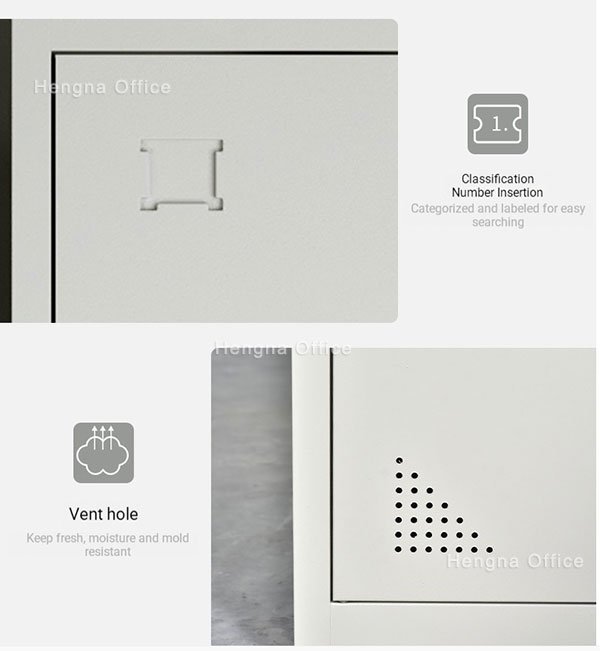
Most ventilated lockers on the market use round ventilation holes.
Round holes have two problems:
- Small opening size limits airflow
- Random placement means no directional control
Triangular air holes solve both:
Design — Triangular holes can be arranged at specific angles to create定向气流通道 (directional airflow channels). Air enters from the bottom and exits from the top, creating natural convection. This delivers better airflow than randomly placed round holes.
Strength — The triangle is a structurally stable shape. With the same opening area, triangular holes weaken the door panel less than round holes. The door stays straight longer, and the locker lasts longer.
Real Benefits of Ventilated Lockers
Members Notice the Difference
Members have reported: before, opening the locker meant a wave of smell. After switching to ventilated lockers, the locker stays mostly fresh.
It’s not psychology. Moving air removes moisture, which slows bacterial growth. Less bacteria = less odor.
Less Work for Staff
Enclosed lockers need daily disinfectant wiping. Ventilated lockers don’t — because the source of the smell is already controlled.
Longer Locker Lifespan
Moisture slowly damages locker hardware: locks seize up, hinges loosen. Ventilation keeps moisture moving instead of settling, so hardware lasts longer.
Where Ventilated Lockers Matter Most
Ventilation isn’t critical everywhere, but for these spaces, it’s a genuine problem-solver:
Swimming Pools and Yoga Studios Just finished swimming or yoga? You’re still wet. Clothes and towels are dripping. Ventilated lockers are practically essential here.
School Athletic Facilities PE locker rooms see heavy, rotating traffic. You can’t expect every student to clean out after each class. Ventilation reduces odor buildup across sessions.
Older Gyms Facilities with poor ventilation systems benefit most. Adding ventilated lockers addresses the smell problem without major HVAC upgrades.
Shared Fitness Spaces High turnover, unpredictable users. Ventilated lockers handle variable storage conditions better than standard units.
What to Check When Buying Ventilated Lockers
Check the Hole Pattern, Not Just Whether Holes Exist
Some lockers have vents, but too few, in the wrong places. Before ordering, confirm the total hole coverage and pattern layout.
Check Panel Thickness
More holes mean less panel strength. If the steel isn’t thick enough, doors warp over time. Cold-rolled steel lockers perform better here.
Check Lock Waterproofing
Vented doors don’t mean the lock mechanism is waterproof. Better locks include water-resistant internals — important for natatoriums and high-humidity environments.
Check Assembly Method
Knock-down (KD) lockers are easier to move, but during installation, make sure doors are mounted straight so the air holes align properly.
Ventilated Locker Checklist
Use this before you buy:
- Triangular pattern or random round holes?
- Cold-rolled steel or thin metal?
- Water-resistant lock mechanism?
- Knock-down assembly available?
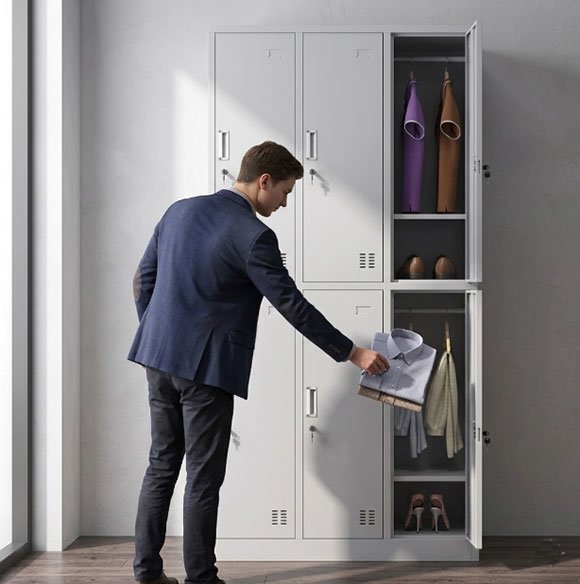
- Hanging rod and shelf included per compartment?
FAQ
Q1: How much more do ventilated lockers cost compared to standard ones?
A: Ventilation adds a small amount to manufacturing cost, but the price difference is marginal. Long-term, ventilated lockers reduce cleaning labor and extend hardware life — so the total cost of ownership is often lower. Contact us for a quote based on your quantity and specifications.
Q2: What else should I consider for swimming pool locker rooms?
A: High humidity is the main concern. Confirm the lock’s waterproof rating and the steel’s rust-resistant coating. Also recommend keeping the locker elevated off the floor or adding a waterproof base to avoid standing water damage.
Q3: Will ventilated lockers handle a busy school PE locker room?
A: Yes. Ventilation handles the odor buildup that comes from heavy, rotating use. If traffic is extremely high (multiple classes back-to-back), adding dehumidifiers or improving room ventilation helps — but ventilated lockers are the foundation.
Q4: Are these lockers difficult to install? Do they need to be wall-mounted?
A: Most gym lockers don’t require wall mounting. They stand on their own weight and structural stability. If your facility has specific safety requirements, check with your supplier about anchoring options.
Ventilated lockers aren’t a “nice to have” — they’re a “missing piece” for many facilities.
- Swimming pools and yoga studios → Essential
- School athletic facilities → Strongly recommended
- Older gyms → Best value upgrade
- Shared fitness spaces → Handles unpredictable use patterns
When you’re locker shopping, put ventilation on your must-have list. It’ll solve half your maintenance headaches.