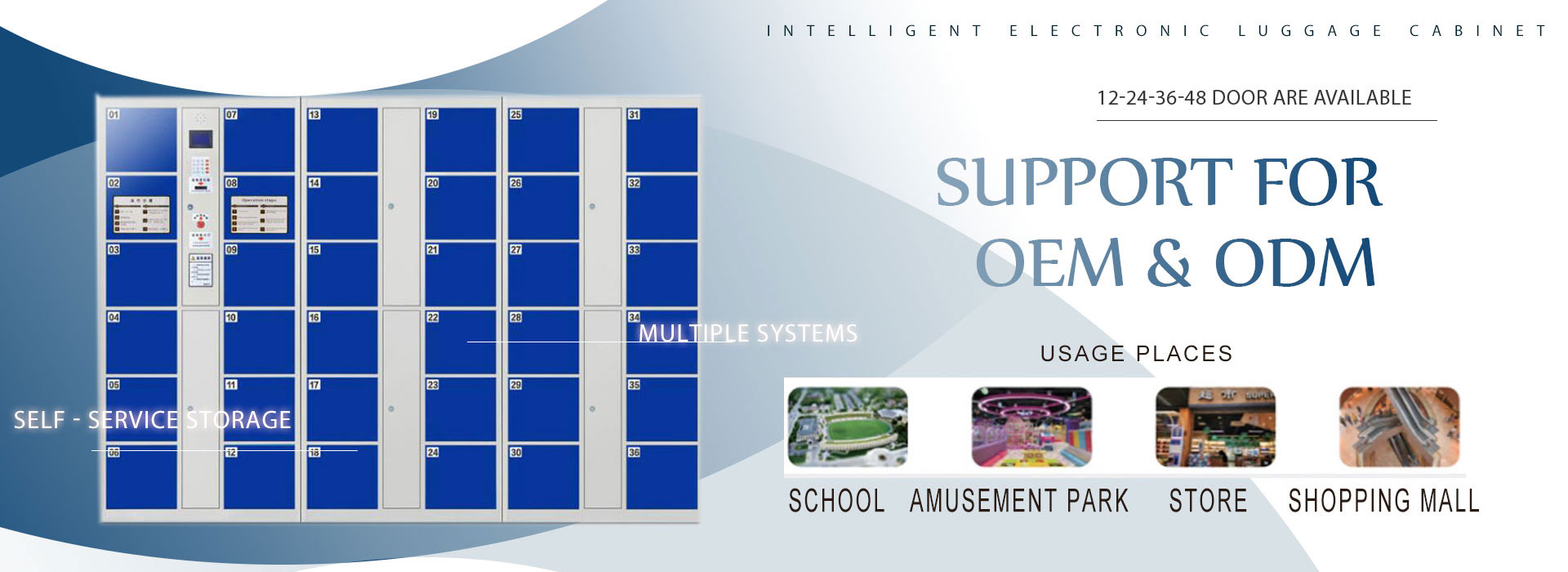
Ask four people whether electronic lockers beat traditional ones and you will get four answers. Not because three of them are wrong — because they are answering different questions, and the questions do not rank in any predictable order.
Here is what each of the four is actually asking, where they are right, and the edge of what they can see.

Facilities: who holds the key?
What this person is buying is the end of key custody. The board on the wall, the signature sheet, the spare set in a drawer, and the conversation every time somebody leaves without returning one. Anyone who has chased a key for a fortnight knows exactly what is being bought.
Where they are right: above roughly thirty regular users, with any staff turnover at all, key custody is the largest running cost of a traditional bank. It is also the one that never appears in a budget, because it is paid in minutes rather than invoices.
Where they stop seeing: they assume every user can be trusted with a credential. In a building with a large transient population, the credential becomes the weak point rather than the lock. A card that can be lent is a card that will be.
What traditional looks like here: one key per door, spare keys sorted by door number and kept in the office. It works, it is cheap, and it is honest about the fact that somebody has to stand at a desk with a sheet of paper.

Finance: which number is bigger in year five?
Finance does not care about keys. Finance cares that the comparison is normally made on purchase price, which is the single number that flatters traditional lockers most.
Three lines belong in the comparison. Credentials: keys cut and re-cut, cards reissued, paper rolls. Labour: minutes per hundred uses. Replacement: what gets thrown away when a door fails.
Where they are right: plenty of electronic projects are justified on labour savings that were never actually being spent, because the cloakroom was open three hours a day. Remove that fiction and the case is thinner than the proposal claims — thin, not absent.
Where they stop seeing: a traditional bank’s costs arrive as many small purchases. Forty keys here, a new cylinder there, an afternoon of somebody’s time. They never form a line item, so they never get compared to anything, and the number that does not exist tends to be treated as zero.
The user: what do I have to carry?
For the person storing a coat, the entire comparison collapses into one question.
| Option | What the user carries | Where it fails |
| Key | A key | Goes home in a pocket, comes back a week later, or never comes back |
| Printed slip | A piece of paper | Dies in a wash, fades in a car, gets left in a hotel room |
| Card | A card | Fine where the building already issues one; cloned where nobody watches |
| Face or finger | Nothing | Masks, gloves, hard light and enrolment all interfere |
Where they are right: any system that adds an object to carry creates lost-item requests, and those requests land on staff time. A slip of paper looks free until the third replacement of the week.
Where they stop seeing: they cannot see the maintenance consequence of their own preference. The card they like is the card that gets cloned. The key they dislike fails visibly and cheaply, which is the failure mode you want at 3am.
Maintenance: what breaks, and who fixes it?
Traditional hardware fails slowly and visibly. A hinge sags, a lock stiffens, a door starts to stick. Somebody notices on a walk-round and it gets fixed before anyone complains.
Electronic hardware fails instantly and silently. A reader stops reading. A controller stops answering. The first person to discover it is usually the one holding a bag.
That difference matters more than failure rate does, and it is why two buildings with identical cabinets can report completely different satisfaction.
Where they are right: an electronic bank needs one thing a traditional bank does not — a named person who can operate a management screen. Not an engineer. A login and ten minutes of training.
Where they stop seeing: they under-rate how much traditional maintenance is done informally, by whoever is on shift, with a screwdriver and no record at all. That is not a fault; it is simply invisible in any comparison.
Where all four agree
One scenario, worth naming because it covers most serious projects: thirty or more regular users, a staffed building, an existing card programme, and people who come and go.
Facilities wants the keys gone. Finance can see the labour line and the credential line both moving the same way. The user already carries the card for the door. Maintenance gets one logged system instead of a drawer of keys and a signature sheet. When all four line up, stop analysing and specify.
Where traditional wins outright
Also worth naming, because it is the case where a supplier should say no.
| Condition | Why electronic loses |
| Under 15 regular users | There is nothing worth automating; the admin cost of running a screen exceeds the cost of a key |
| No reliable power at the location | A battery-fed electronic lock is a different and more expensive product |
| Nobody to hold a login | An unmanaged electronic system is strictly worse than a key board, because it fails silently |
| Outdoors in hard heat or cold | Electronics age faster than steel, and the cabinet is the cheapest part to replace |
In those four, mechanical key lockers are the right answer. One key per door, spares sorted by number, and nothing to log in to.
Two things all four get wrong
Whatever their position, the same two errors show up in almost every comparison document.
Door count by headcount. Cabinets are sized by how many people are inside one at the same moment, not how many use the building in a day. A site with 300 daily visitors and a 40-minute average stay needs far fewer doors than the headcount suggests — and a site where bags stay all day needs far more.
Position treated as a detail. The same bank, moved from the corridor people already walk down to one fifty metres off it, can run at a third of the usage. No specification fixes that, and it is the single most common reason a perfectly good installation is later described as a mistake.
Settling it in one meeting
| Site | Traditional | Electronic | The question that decides |
| Small office, under 15 | ✓ | Is there anyone to run it? | |
| Office, 30 to 100 | ✓ | Does the building issue cards already? | |
| School | ✓ | Can a lost card be replaced the same day? | |
| Gym | ✓ | Is the card the membership card? | |
| Hospital, staff changing | ✓ | Who opens a stuck door at 3am? | |
| Outdoor compound | ✓ | Is there power, and is there shelter? |
If the four of you still disagree after that table, the disagreement is almost never about which lock is better. It is about whose budget pays for it, and no cabinet wins that argument.
The mechanical side is set out under mechanical key lockers; the card, barcode and biometric options sit together under electronic locker systems.
What each access type suits, and who can use it without being enrolled first, is compared in electronic lockers for UK sites.
The same question taken further is in brush card lockers, and a different angle on it in electronic cabinets with 12 doors.