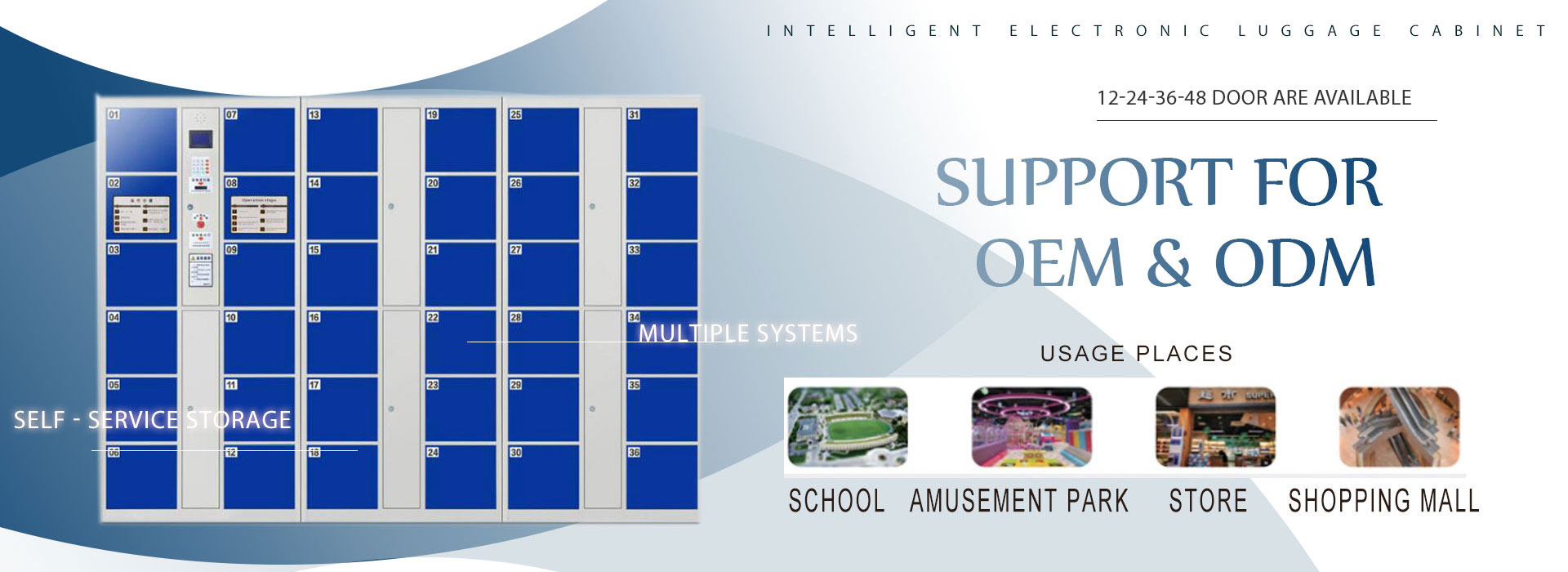
A shopper with a heavy bag shops differently. They hold it in one hand. They skip the top shelves. They rush the last two aisles. The same shopper with their bag stored at the entrance moves at browsing speed, uses both hands, and spends more time in the store. Every operator has watched this happen. The fix is not bigger baskets; it is emptier hands. That is the whole business case for barcode lockers in supermarkets—everything else is engineering detail.Barcode electronic lockers are the tool supermarkets use to convert “I came in for milk” into a full-basket visit. They sit at the entrance, work without staff, and cost less to run than any staffed service counter.
The Problem: Bags and Baskets Compete for the Same Hands
Supermarket operators have tried everything: staffed cloakrooms (too much labor), open shelving by the door (items get stolen), coin lockers (nobody has coins). Each solution fails on one of three things—labor cost, shrinkage, or customer friction.A barcode locker removes all three failure points at once. The customer presses one button, takes a ticket, stores their bag, and shops hands-free. When they leave, they scan the ticket and take their things. The machine does not call in sick, does not take a lunch break, and does not need a camera watching it.
How Shoppers Experience It
The flow takes about 15 seconds on both ends of the visit. Press “Store.” Take the printed ticket. Put items in. Close the door. When leaving, hold the ticket under the scanner and the correct door opens. First-time users figure it out without help because the steps are printed on the panel in two lines.Tickets are single-use and expire after a set window—usually 8 to 12 hours—so a ticket picked up off the floor cannot open a door tomorrow. If a customer loses a ticket, the service desk opens the door with a master key after a quick check of the time stamp on the control board’s log.Families with strollers benefit the most. A stroller cannot fit a basket, and a parent pushing one has zero hands free. Storing a diaper bag and a shopping bag at the entrance turns a stressful 20-minute run into a normal shop. Stores that hang a one-line sign above the unit—”Store your bags here, hands-free shopping”—see adoption climb within the first week, especially when a staff member stands near the unit during opening hours and shows the first ten customers how it works.
Sizing: 12, 24 or 36 Doors
Door count follows store size and basket mix:
12 doors: convenience stores, small express markets, pharmacy chains with a bag shelf problem.
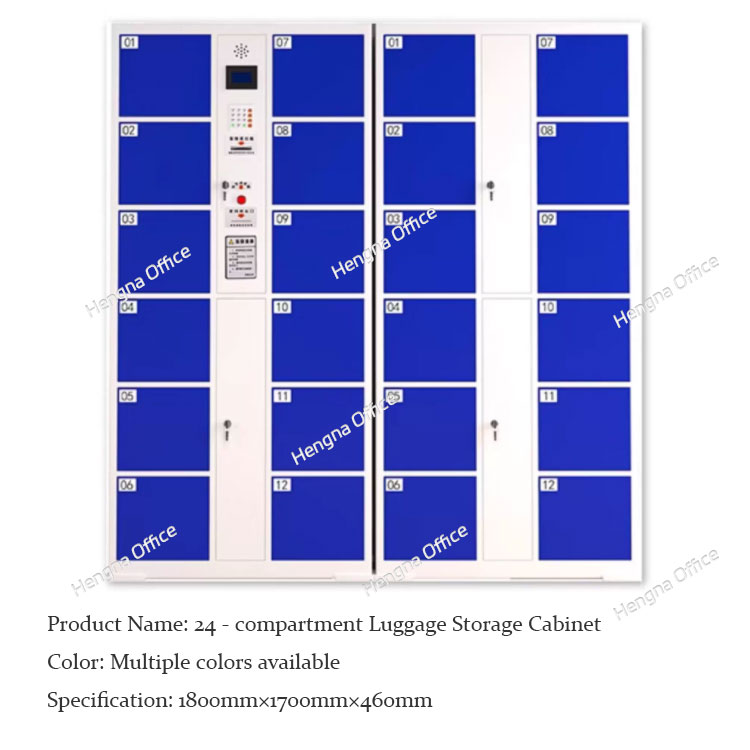
24 doors: the default for a standard supermarket of 1,000 to 3,000 square meters.
36 doors: hypermarkets, wholesale clubs, stores near schools or offices where bag storage demand spikes at 4 p.m.
Operators who already run self-checkout know the pattern: peak-hour queues at the lockers look bad, so size for the Friday-evening peak, not the Tuesday-morning average. If in doubt between two sizes, take the bigger one—the space a locker bank occupies is a fraction of one aisle, and a line at the entrance sends a worse signal than any extra cost.Door mix matters as much as door count. A store near a gym or a school wants more large doors for bulky bags. A city-center store serving office workers at lunch wants more small doors for laptop bags and umbrellas. The mix is set at the factory, so the order should reflect what the customers actually carry, not what the store used to see with its old locker row.
Placement Inside the Store
The entrance is the obvious spot, but it is not always the best one. Entrance placement works when the store has a wide vestibule and the unit does not block the anti-theft gates. Otherwise, three alternatives work well:
Next to the service counter—staff can see the unit, and lost tickets get resolved where they happen.
On the wall between entrance and produce—shoppers pass it anyway, so adoption goes up.
Near self-checkout for stores that run a “no bags past this point” rule.
Whatever the spot, keep the unit on an always-on power circuit. A locker that resets at 6 p.m. locks customers’ bags inside and creates exactly the service-desk conversation the store was trying to avoid.One placement mistake to avoid: hiding the unit behind a pillar or a promotional display. If the locker bank is not visible from the entrance, shoppers will not look for it. The unit itself is the best advertisement—blue doors with a lit panel read as “storage here” from 20 meters away.
Steel, Hygiene and Maintenance
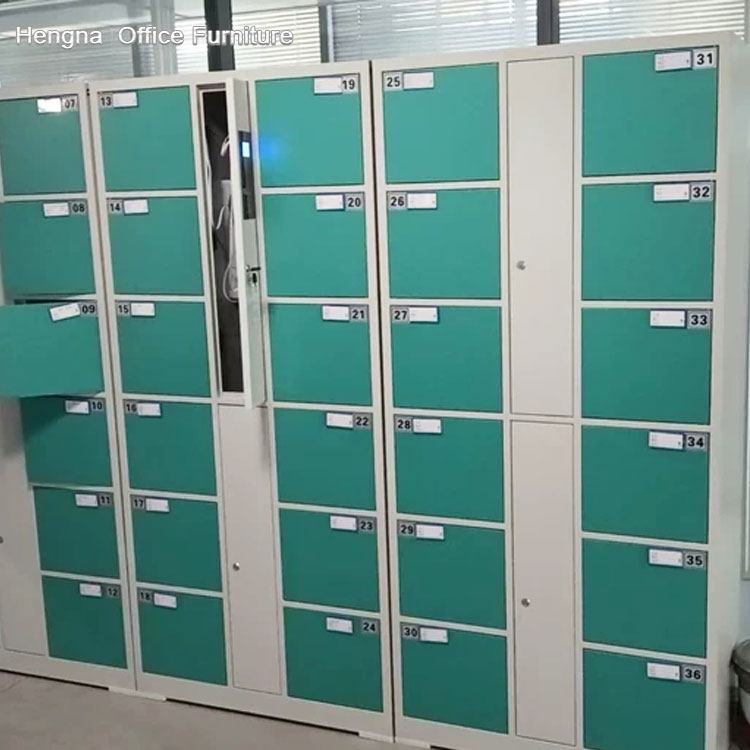
Supermarket lockers live in a damp, wipe-down environment. Floors get mopped daily; the mop water ends up on the unit’s base. Spills happen. The unit should have 0.8mm cold-rolled steel doors with a powder-coated finish and a raised base so water never pools against the steel.Powder coating also survives the disinfectant wipes stores use on high-touch surfaces. The scanner window needs a dry cloth once a day. The only consumable is the thermal paper roll, which prints thousands of tickets before replacement.In wet climates, add one more requirement: a raised base plus side ventilation, so a wet umbrella stored at 9 a.m. does not turn the compartment into a sauna by noon. These are standard on models designed for entrance areas, but worth confirming on the order sheet.
What to Ask the Supplier
Door steel thickness? 0.8mm minimum for a wet-floor store environment.
Can the door size mix be customized? Some stores want 24 small doors for bags plus 12 large for strollers and helmets.
Control board warranty? Three years is standard.
Does the ticket printer handle humid air? Stores with open cold rooms need a sealed printer.
Lead time and installation? Factory-direct units typically ship in 15 to 25 days plus ocean freight, and install in under an hour with two people.
The Payback Logic
The unit costs more than a row of old coin lockers, but it replaces labor and removes friction at the same time. Staffed cloakrooms cost hours of payroll every week. Lost-sale friction is harder to measure, but the pattern is consistent: shoppers with stored bags move slower, fill larger baskets, and come back. Most stores recover the difference within months, not years.Theft also drops. Bags stored behind a ticket-controlled door cannot be swept off an open shelf, and the control board log tells staff exactly when each door was opened—useful when a customer reports something missing. The locker bank quietly handles the loss-prevention argument that staffed cloakrooms could never answer.If the store already runs barcode lockers for parcel pickup, the same supplier and the same access habit can serve both systems. See our guide on barcode lockers for public venues and our OEM supermarket locker manufacturer guide to compare configurations.At Luoyang Hengna, we build barcode electronic lockers for supermarkets in 12, 24 and 36 door versions, with customizable door mixes, 0.8mm steel, and a three-year control board warranty. Tell us your store size, entrance layout, and Friday-evening customer count. We will size the unit and quote it within one working day.