A school that bans phones without giving phones a place to go creates a black market. Phones end up in waistbands, pencil cases, and the bottom of backpacks, where they buzz through the lesson anyway. A school that bans phones AND installs phone lockers at the classroom wing turns the policy from a fight into a routine.That is the difference phone lockers make: they give the no-phone policy a physical home. The student drops the phone in a numbered compartment, takes a ticket or sets a PIN, and collects it after the bell. The teacher stops being the phone police. The front office stops storing confiscated phones in a drawer.
What a School Phone Locker Is
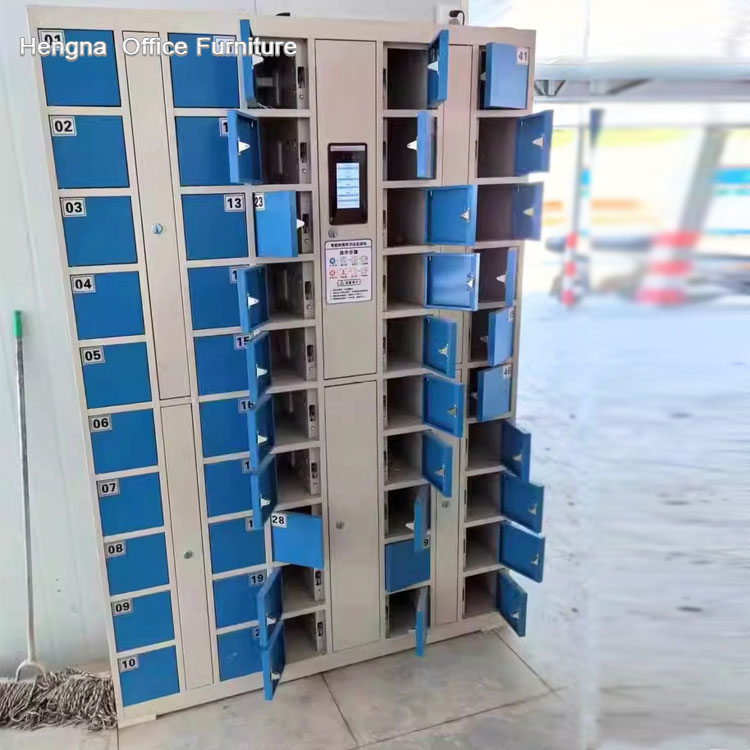
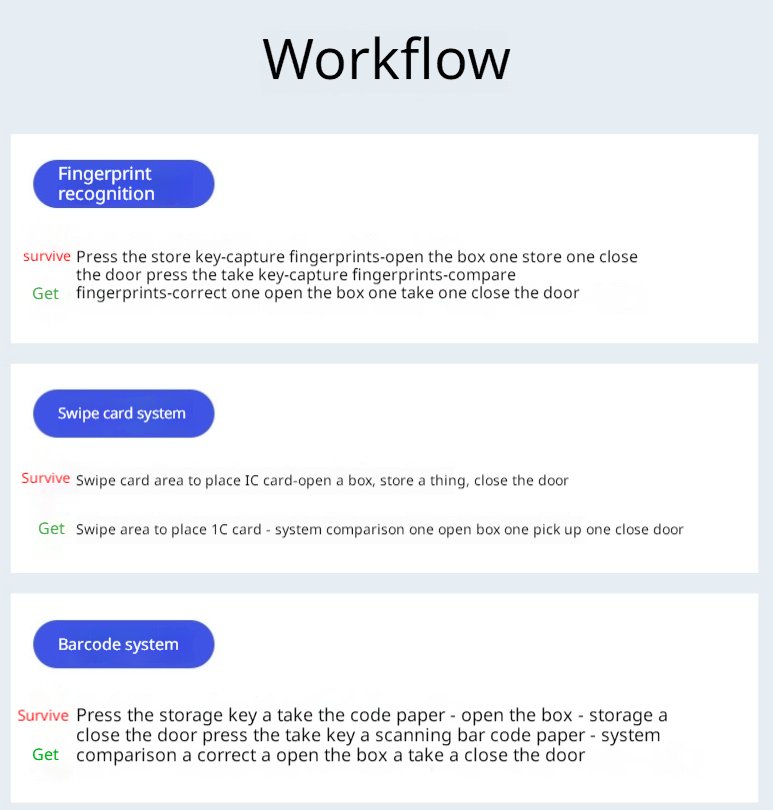
A school phone locker is a steel cabinet with 30 to 60 small compartments, each sized for a phone, earbuds, and a wallet. Access runs one of three ways: printed barcode ticket, self-set PIN, or fingerprint. For schools, PIN and barcode are the most practical—a PIN costs less per door and survives sweaty fingers after PE, and a barcode ticket cannot be shared between students.The unit runs on standard 110V power, standalone, with no network. The control board logs every open and close event with a time stamp. If a student forgets a PIN, a staff member opens the door with a master key and the student sets a new one.
Where Schools Put Them
Three placements work, depending on how the policy is written:– **Classroom wing corridors.** Students store phones before first period and collect after the last. This is the standard layout for full-day no-phone policies.
– **Exam hall entrances.** Temporary use on test days. The locker bank sits at the check-in line; phones go in before entry, come out after collection.
– **Front office.** For schools that only collect phones during specific events, a smaller unit next to the office desk does the job.
Exam Days: The Peak That Sizes the Unit
The sizing question is decided by exam days, not average days. A school with 800 students may only store 150 phones on a normal Tuesday, but needs 400 doors when two grades sit exams at once. Size for the exam peak.Door count also depends on how the policy runs. Full-day storage needs roughly one door per phone. Short-term exam storage can run several exam sessions against the same doors, since each session clears before the next one starts. As a working rule: a 30-door unit covers a 300-student exam session, a 60-door unit covers 600, and schools that run external standardized tests on weekends should add a second bank at the gym or hall entrance rather than making students walk across campus with a phone in hand.
Charging Ports: Yes or No
Some models include USB charging in each compartment. That is a decision, not a default. Charging ports add wiring and cost per door. A phone charging in a locker during class comes out at 100% battery when the bell rings—some schools want exactly that, because students’ phones die during the day and dead phones create pickup confusion. Other schools see it as a loophole that keeps phones “alive” all day.Most schools land on a split: charging ports on exam-hall units, where phones sit for hours, and plain compartments in corridors. If the school runs a one-to-one device program with tablets, charging ports on a portion of doors let the same bank serve tablets overnight.
Choosing the Access Type by Age Group
Younger students do better with printed barcode tickets—there is nothing to remember, and a lost ticket is a two-second reprint at the office. Middle and high school students handle a self-set PIN fine, and PIN doors cost less per door because there is no printer consumable. Fingerprint is the right call only for exam halls or faculty areas, where the same users return daily and speed matters. Mixing types in one bank is possible: PIN on most doors, barcode on a teacher row, fingerprint on the office unit.
The Parent Conversation
Parents are easier to win over when the policy has a physical home. “Phones go in lockers” reads differently from “phones are confiscated.” The locker version protects the phone—a phone locked in steel is not a phone lost from a backpack, dropped in a hallway, or stolen from a desk. Schools that explain this in the policy letter see fewer angry calls in the first month. Some schools also let students keep phones on silent in the locker during the day instead of requiring morning collection, which is a smaller policy change with most of the same classroom benefit.
Overnight Phones and the Lost-Property Rule
Every phone locker bank needs an overnight rule written down before day one. The standard version: anything left after the school day is opened with the master key, logged, and moved to the front office; anything unclaimed for a week goes to lost property. The control board log shows when each door was last opened, so disputes end with a time stamp instead of an argument. Printing the rule on a small sign next to the unit removes the negotiation from the front desk entirely.
Why Tickets and PINs Beat Keyed Phone Cabinets
Keyed cabinets fail the same way in every school: keys get lost, key rings get shared, and the office keeps a drawer of unclaimed keys. A barcode ticket costs almost nothing and expires at the end of the day. A self-set PIN survives the whole term and resets in ten seconds when forgotten. Both remove the key ring from the system entirely, and the control board log settles every “someone opened my door” dispute with a time stamp.Students adapt in about one day. The first morning takes five minutes of staff time at the unit; by day two, the flow runs itself. Schools that add a one-line sign above the bank—”Phones in lockers, focus in class”—report fewer policy arguments in the first week.
Steel, Because Students Lean on Things
Students lean on lockers, sit on them, and slam doors on the last day of term. Specify 0.8mm cold-rolled steel doors with a powder-coated finish. A phone locker in a corridor takes the same abuse as a hallway locker and should be ordered to the same standard. The powder coat also survives the disinfectant wipes schools use on high-touch surfaces during flu season.
Installation Notes
A phone locker bank needs a grounded 110V outlet within 6 feet, a level floor, and enough clearance for doors to open fully while a class walks past. The unit ships assembled except for leveling feet, and two people can position a 30-door bank in under an hour. If the corridor has a fire marshal walk-through scheduled, place the bank after that inspection so the final position is the approved one.
Five Questions to Ask a Supplier
Door steel thickness? 0.8mm minimum for school use.
Can access types be mixed? PIN on some doors, barcode on others, per the school’s age groups.
Does the log show per-door open times? Needed for lost-item disputes.
Control board warranty? Three years is standard.
Lead time? Factory-direct units ship in 15 to 25 days plus ocean freight.
At Luoyang Hengna, we build phone lockers for schools in 30, 40, 50 and 60 door versions, with barcode, PIN or fingerprint access and optional USB charging. Tell us your enrollment, your phone policy, and your exam-day peak. We will size the unit and quote it within one working day.