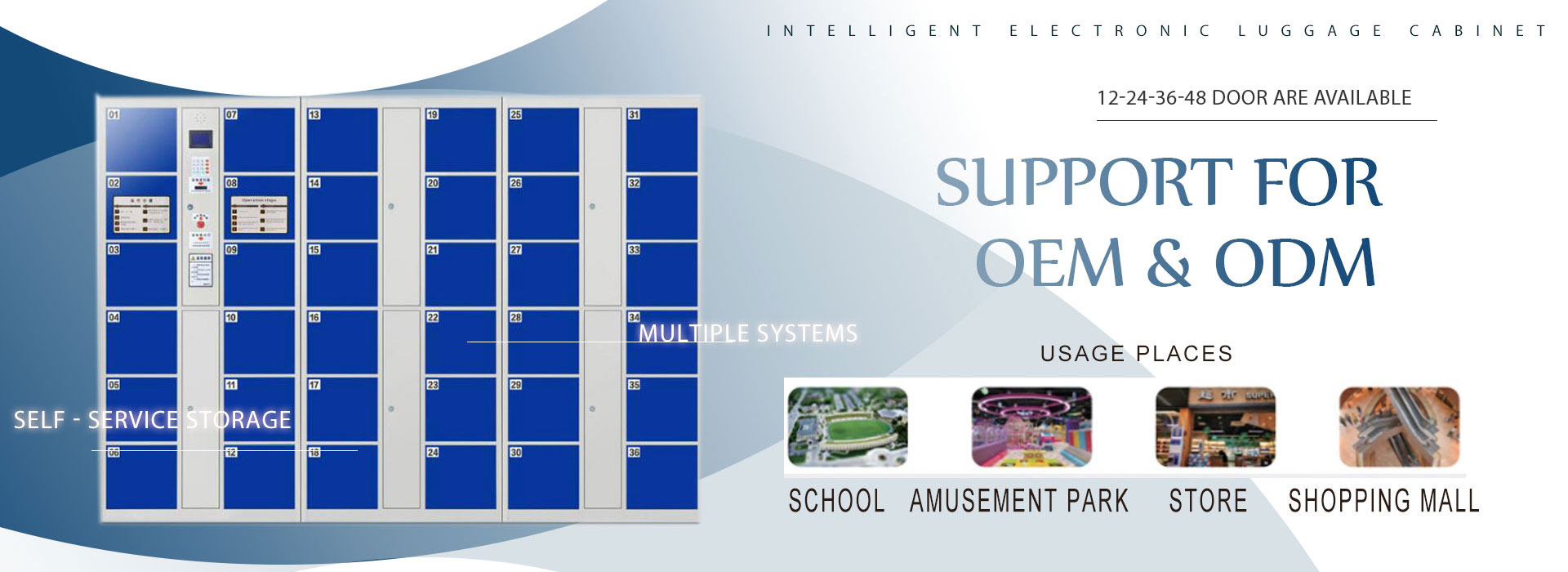
In high-footfall public spaces—such as libraries, gyms, hospitals, and science museums—traditional key-based lockers are increasingly revealing critical shortcomings: inefficiency, security vulnerabilities, and high operational costs. With the advancement of smart technologies, the 24-door face recognition steel locker has emerged as the go-to solution for modern facilities, offering contactless access, enhanced security, and intelligent management. This article explores its five core advantages, compares it with traditional key lockers, and helps you determine if it’s the right fit for your venue.
- 1. Contactless & Keyless: Ultimate User Convenience
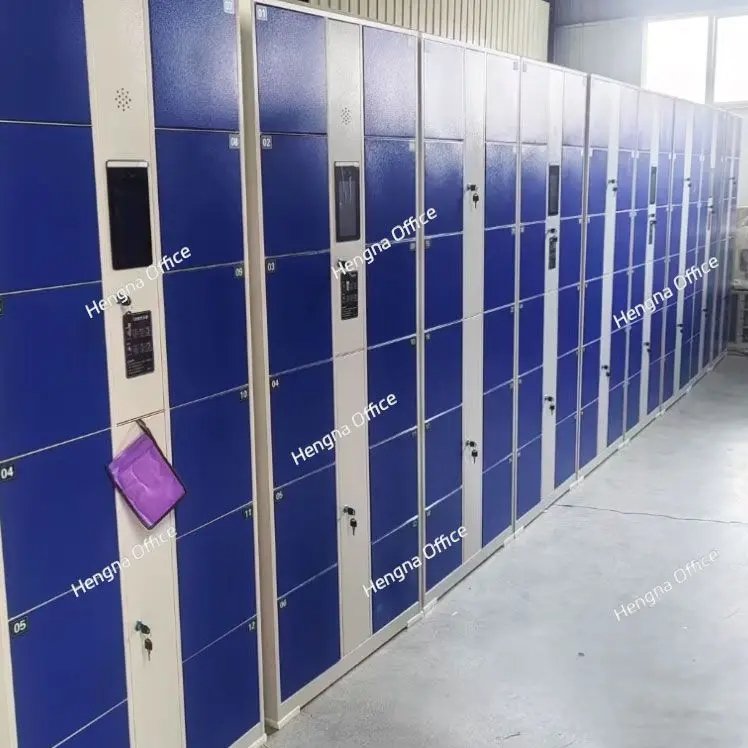
- 2. Biometric Security with Full Audit Trail
- 3. Built for Heavy-Duty Use: Durability Meets Space Efficiency
- 4. Drastically Lower Operational & Maintenance Costs
- 5. Smart Management & Real-Time Monitoring
- Face Recognition Locker vs. Traditional Key Locker: Key Comparison
- Which Solution Fits Your Venue?
- ❓ Frequently Asked Questions (FAQ)
- More Than a Locker—A Leap in Facility Intelligence
1. Contactless & Keyless: Ultimate User Convenience
Users no longer need to carry keys, remember passwords, or worry about lost cards. Simply stand in front of the locker, and facial recognition unlocks the door in under 0.5 seconds. This completely touch-free experience reduces cross-contamination risks—ideal for post-pandemic public health standards—and significantly cuts waiting times during peak hours, improving overall user satisfaction and flow efficiency.
2. Biometric Security with Full Audit Trail
Facial features are unique and impossible to replicate. Every access event is automatically logged with timestamp, user ID (or facial template), and locker number, creating a complete digital audit trail. This enables rapid incident investigation and meets compliance requirements in high-security environments like hospitals, laboratories, and R&D centers.
3. Built for Heavy-Duty Use: Durability Meets Space Efficiency
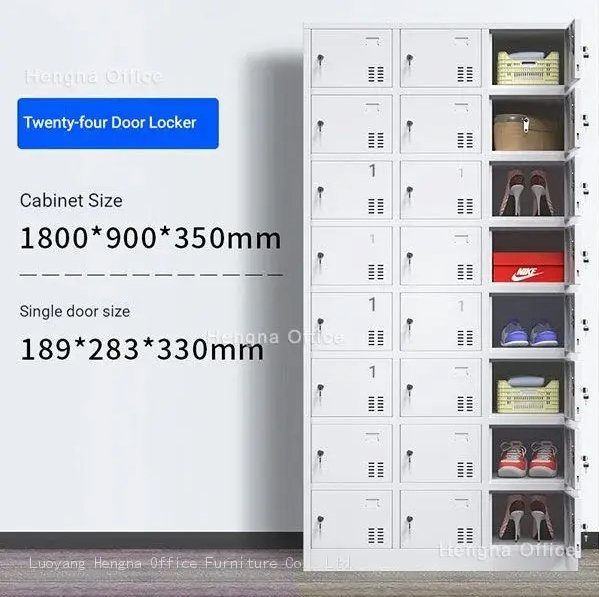
Constructed from 1.2mm+ cold-rolled steel, these lockers are anti-theft, corrosion-resistant, and impact-proof—engineered to withstand hundreds of daily operations. The 24-door configuration strikes the perfect balance between storage capacity and spatial footprint, making it the “golden standard” for universities, sports arenas, and shopping malls.
4. Drastically Lower Operational & Maintenance Costs
No more replacing lost keys, rekeying locks, or managing physical tokens. Administrators can remotely clear all lockers with one click via the management dashboard, reducing on-site inspection workload by over 70%. Over a 3–5 year period, the total cost of ownership is significantly lower than traditional systems.
5. Smart Management & Real-Time Monitoring
Advanced models feature:
- Anti-tamper alarms (triggered by forced entry)
- Overdue usage alerts (auto-notifications for extended occupancy)
- Dual-mode operation (works offline; syncs logs when reconnected)
These capabilities shift facility management from reactive troubleshooting to proactive oversight—laying the foundation for integration into broader smart building ecosystems.
Face Recognition Locker vs. Traditional Key Locker: Key Comparison
| Feature | Face Recognition Locker | Traditional Key Locker |
|---|---|---|
| User Experience | Instant, hands-free access in 0.5s | Requires physical key handling |
| Security Level | High (biometric uniqueness) | Low (keys can be duplicated or lost) |
| Management | Centralized digital control | Manual tracking, labor-intensive |
| Maintenance Cost | Minimal (electronic system) | High (mechanical wear, key replacement) |
| Initial Investment | Higher | Lower |
While the upfront cost is higher, the ROI over 3–5 years far exceeds that of traditional lockers due to savings in labor, security, and user satisfaction.
Which Solution Fits Your Venue?
✅ Choose Face Recognition Lockers If You Operate:
- Smart libraries, science museums, premium gyms
- Hospitals, biotech labs, or R&D facilities requiring strict access logs
⚠️ Traditional Key Lockers May Suffice For:
- Temporary events, small community stores
- Low-budget or ultra-low-usage sites with no digital infrastructure
❓ Frequently Asked Questions (FAQ)
Q1: Can the locker work in low light or when users wear masks?
A: Industrial-grade units use dual-spectrum cameras (infrared + visible light) for reliable recognition in dim environments. Many models also support liveness detection and mask-aware algorithms, ensuring high accuracy and anti-spoofing protection.
Q2: How is user privacy protected? Are facial data uploaded to the cloud?
A: Reputable manufacturers offer on-premise deployment options, where all biometric data is stored locally on the device—never transmitted online. This complies with GDPR and China’s Personal Information Protection Law (PIPL).
Q3: What happens during power outages or network disconnections?
A: The locker includes a backup battery module, enabling several hours of continued operation after power loss. In offline mode, facial recognition still functions locally, and all logs sync automatically once connectivity is restored.
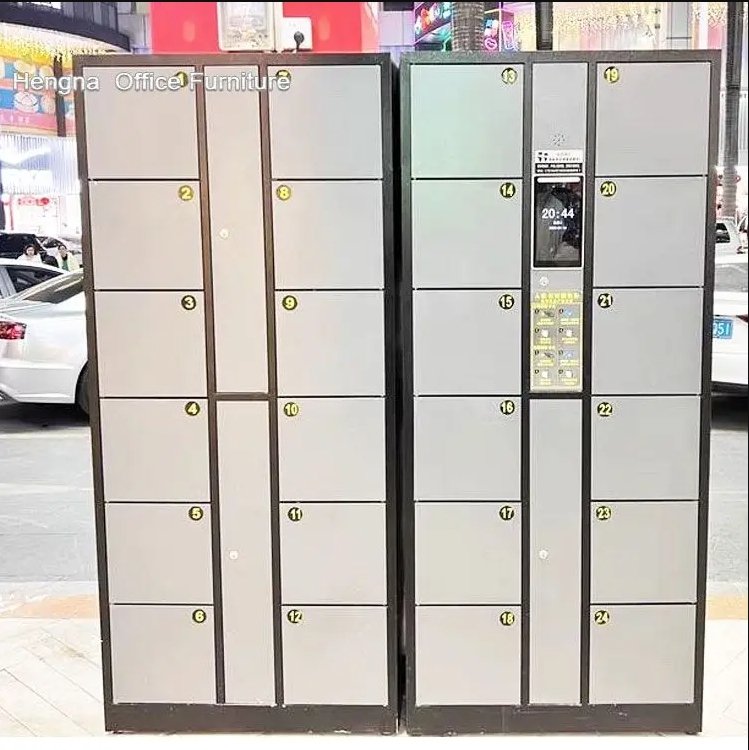
Q4: Can the 24-door unit be customized in size or color?
A: Yes. Professional OEM/ODM suppliers support full customization—including dimensions, door count, RAL color codes, and logo branding—to match your facility’s aesthetic and spatial requirements.
More Than a Locker—A Leap in Facility Intelligence
Installing a 24-door face recognition steel locker isn’t just a hardware upgrade—it’s a strategic step toward smarter, safer, and more efficient public space management.
Contact us today to request a custom OEM/ODM solution or a free quote!
Let us help you build the next-generation secure storage system for your library, gym, hospital, or commercial center.