Nobody wants to stand next to a wall outlet in an airport for forty minutes. Yet that is still what most public charging looks like: a taped-off corner, a cluster of cables, and one person guarding a phone that is slowly filling with power. Phone charging lockers end that scene. You put the phone in a door, take the ticket, and go eat, shop, or sit. The phone charges inside a locked steel compartment, and you come back when you want to.Charging lockers are the fastest-growing category in public storage, and the logic is simple: the venue sells time, and charging gives visitors a reason to stay longer without worrying about their battery.
What a Charging Locker Actually Is
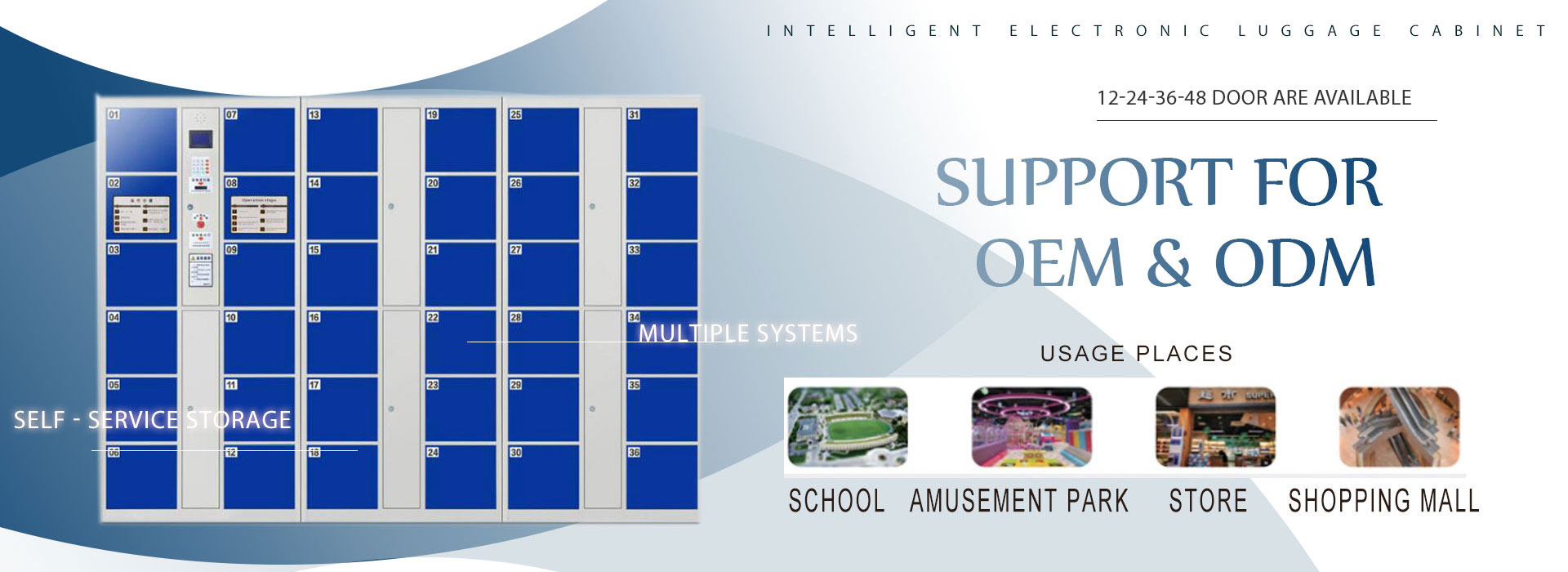
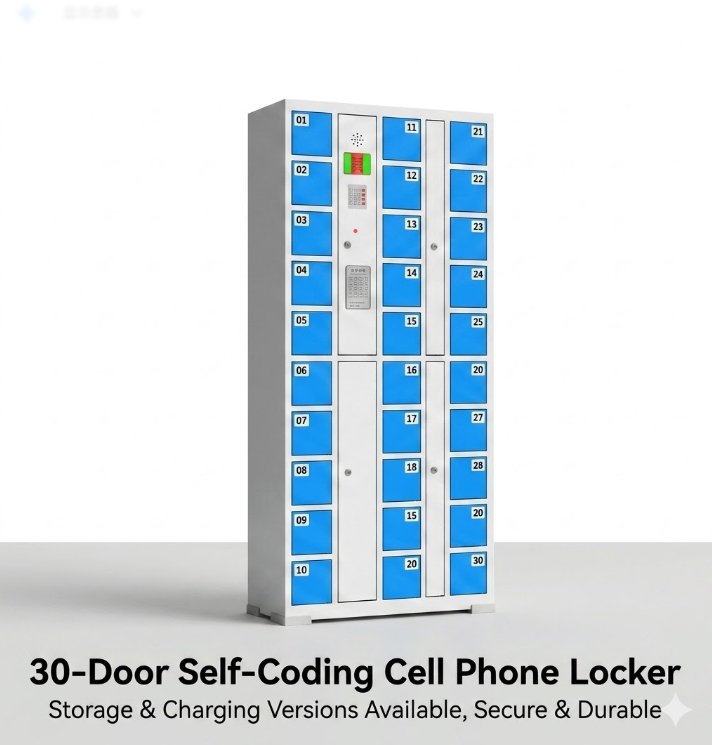
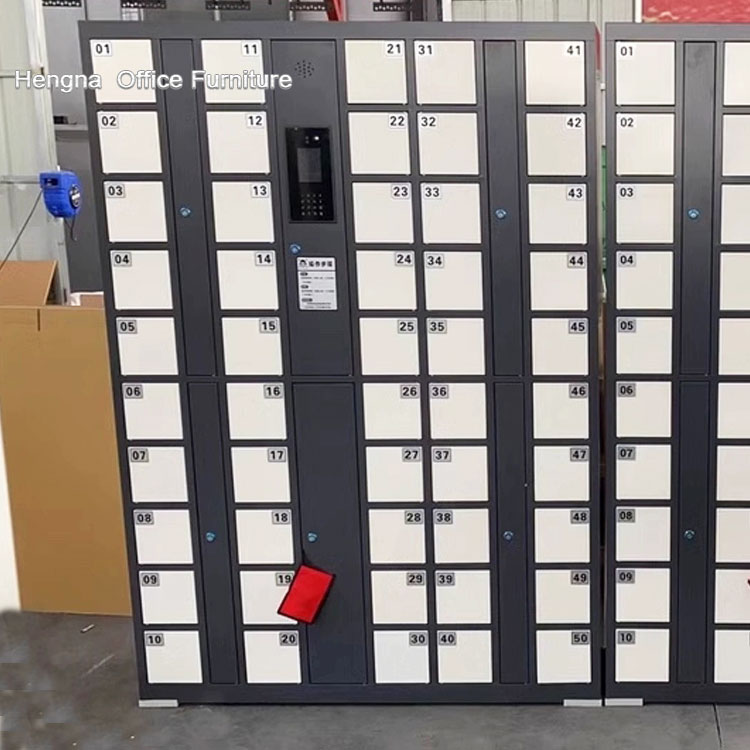
A phone charging locker is a steel cabinet with 30 to 60 compartments, each fitted with a USB port (or USB-C plus Lightning adapters on some models) inside the door. Access runs on a printed barcode ticket or a self-set PIN. The user stores the phone, plugs it into the port inside the compartment, and closes the door. The phone charges while locked; the user keeps the ticket.The unit runs on a standard 110V circuit with an internal transformer feeding the USB ports. A 60-door bank draws about the power of a small office appliance. The control board logs open events, and lost tickets are resolved at the service desk with a master key.
Where Venues Install Them
– **Airports.** Gate-side banks serve travelers on long layovers. A 60-door unit near the food court fills during every delay announcement.
– **Stadiums and arenas.** Fans arrive at 100% battery and leave at 15% after three hours of streaming and photos. A charging bank near concessions turns a dead phone into one more reason to stop.
– **Gyms and leisure centers.** Members charge during workouts; the locked door means the phone is not sitting on a bench or in a locker with a padlock.
– **Shopping malls.** The same unit that stores bags during shopping charges phones while shoppers browse—two services, one cabinet.
Charging Speed and Cable Reality
The honest spec for public charging lockers is slow-and-safe, not fast charging. Each compartment typically delivers 5V/1A to 2.1A—enough to add 30 to 50% battery during a 60-minute stop. That is deliberate: lower current runs cooler inside a closed steel box, and heat is the enemy of both the phone and the wiring. Fast-charging ports in a sealed compartment need active ventilation, which adds cost and noise. For a venue, a steady charge that works every time beats a fast charge that trips thermal protection.Cables: the unit should come with its own cables fixed inside the compartments—most buyers order Lightning and USB-C on alternating doors. Loose cables walk away, and a charging locker with missing cables is a complaint machine. Some models use a universal port with the user’s own cable; that halves maintenance but asks more of the visitor. The venue picks one model and stays with it.
Free or Paid: The Venue Decision
Venues split on pricing. Transit hubs and malls usually keep charging free, because a charged phone means a visitor who lingers. Arenas sometimes charge a small fee at a kiosk next to the bank—the revenue is secondary, the real value is rationing: a fee stops one person from camping a door for three hours on a concert night. Either model works on the same hardware. The unit does not need a payment terminal; a separate kiosk or a venue app handles it, and the locker stays simple.
The Overnight Problem
Every charging bank needs an overnight rule. The standard version: tickets expire after the venue closes, doors clear at shutdown, and anything left inside goes to lost property with the control-board log as the record. For 24-hour venues like airports, the rule is a time limit instead—usually 4 to 6 hours—printed on the unit. A phone locked in a charging door at 2 a.m. with no staff on duty is a complaint the next morning; the time limit prevents exactly that.
Sizing: How Many Doors Does a Venue Need
Charging demand is spiky. An airport gate area might sit at 10% occupancy for hours, then hit 100% when a flight delays. Size by the spike: count how many visitors the venue holds during its busiest hour, take 3 to 5% of that number, and round up to the next door tier. A 1,500-seat arena orders 60 doors; a neighborhood gym orders 30; a small transit station orders 20 to 30.Doors with charging cost more than plain storage doors, so venues that run both services often order a mixed bank: two-thirds charging compartments, one-third plain storage for bags and helmets.
Steel, Vandalism and the Security Logic
A charging locker holds someone’s most valuable object, unattended, in a public space. The cabinet should be 0.8mm cold-rolled steel with a powder-coated finish and recessed handles. Public users test doors; a door that flexes invites a harder test. The locked compartment is the entire security model—the phone is not “charging in public,” it is locked in steel while charging. That is also the answer to theft insurance questions venue operators ask.The unit needs an always-on circuit. A charging bank on a timer switch that drops at 10 p.m. strands phones inside locked doors overnight—the worst possible end to a concert. Confirm the circuit before the electrician leaves.
Installation Checklist
Before ordering, confirm four things at the installation spot: an always-on grounded 110V circuit within 6 feet, a level floor away from standing water, clearance for doors plus passing foot traffic, and a visible position where visitors will actually see the bank. Units ship assembled except for leveling feet and go in with two people in under an hour. If the venue is outdoors or semi-outdoors, add a canopy and a sealed ticket printer to the order—rain on the scanner is the fastest path to a dead unit.
Port Durability: The Part That Breaks First
In public charging lockers, the USB port is the first part to fail—not the reader, not the door, not the board. A public port gets yanked at angles, jammed with dust, and used ten thousand times a year. Order ports mounted at the back of the compartment with a short strain-relief cable, not a rigid socket at the front. Ask the supplier how the port assembly is replaced: a modular port plate that swaps in two minutes beats a soldered socket that needs a technician and a service visit. This one spec decides whether the bank is still fully working at year three or half-dead at year two.
Five Questions to Ask a Supplier
What is the per-door charging current? 5V/1A-2.1A is the safe public range.
Are cables fixed inside the doors? Order Lightning and USB-C by door plan.
Is the compartment ventilated? Even slow charging needs a small vent.
Control board warranty? Three years is standard.
Lead time? Factory-direct units ship in 15 to 25 days plus ocean freight.
At Luoyang Hengna, we build phone charging lockers in 30, 40 and 60 door versions, with fixed internal cables, ventilated compartments, 0.8mm steel, and a three-year control board warranty. Tell us the venue type, the busiest-hour visitor count, and the phone mix your visitors carry. We will size the bank and quote it within one working day.