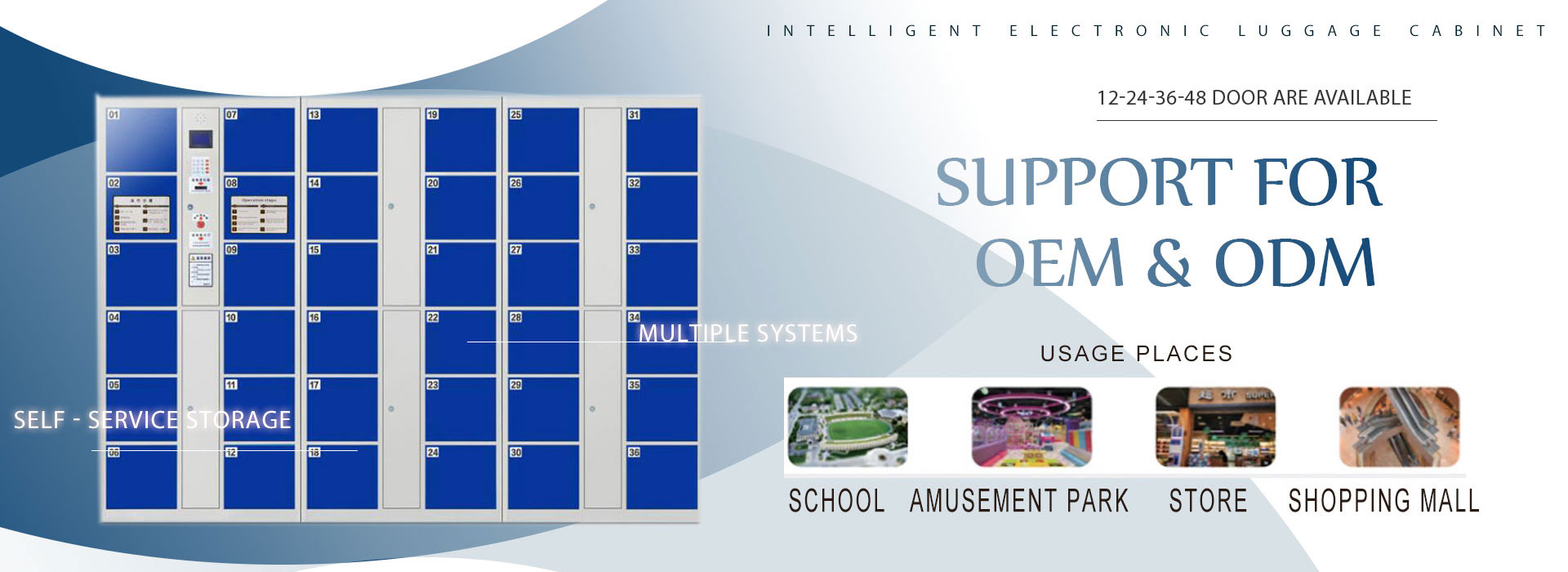
In most residential compounds the parcel system is a person. The guard signs for forty boxes a day, stacks them behind the desk, and hands them out to whoever asks — which works until a box goes missing and nobody can say who took it.
A locker bank does not fix the compound. It removes the stack, the signing and the argument, and leaves the guard free to do the job he was hired for.
The life of one parcel, before and after
Before: the courier arrives at eleven, the guard is on the gate, the box goes on the pile. The resident comes home at seven and the guard is off shift. The box spends a night in a room that is not locked.
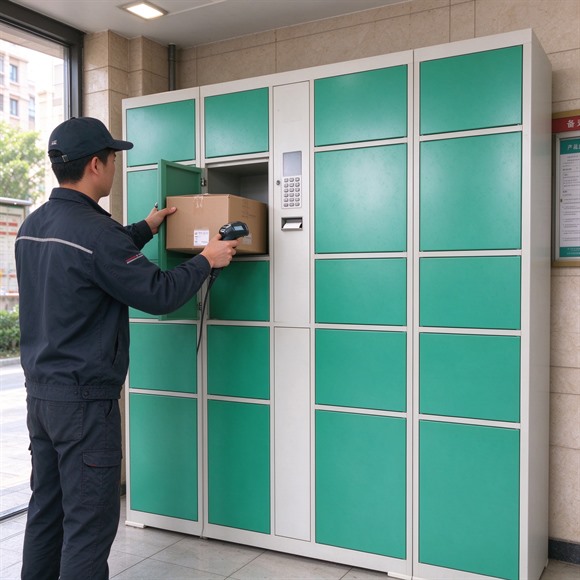
After: the courier scans the delivery, a door opens, the box goes in, and the resident gets a code. Collection happens at eleven at night if that is when they get home.
- The parcel is locked from the moment it is deposited, not from the moment somebody notices.
- The record says which compartment, what time, and which code opened it.
- The guard’s day stops being a sequence of interruptions.
- The lobby stops being a warehouse.
What it costs the compound, in things other than money
Three costs show up in every compound running a manual parcel desk, and none of them appear on an invoice:
- Disputes. One missing box takes a management office twenty minutes and a reputation. Three a month and residents start photographing the guard.
- Space. A pile of forty boxes occupies the corner of a lobby that was designed for people to stand in.
- The handover. Every parcel is a conversation: name, unit number, signature, and a hunt through the pile while somebody waits.
Twenty-four doors, and when that is not enough
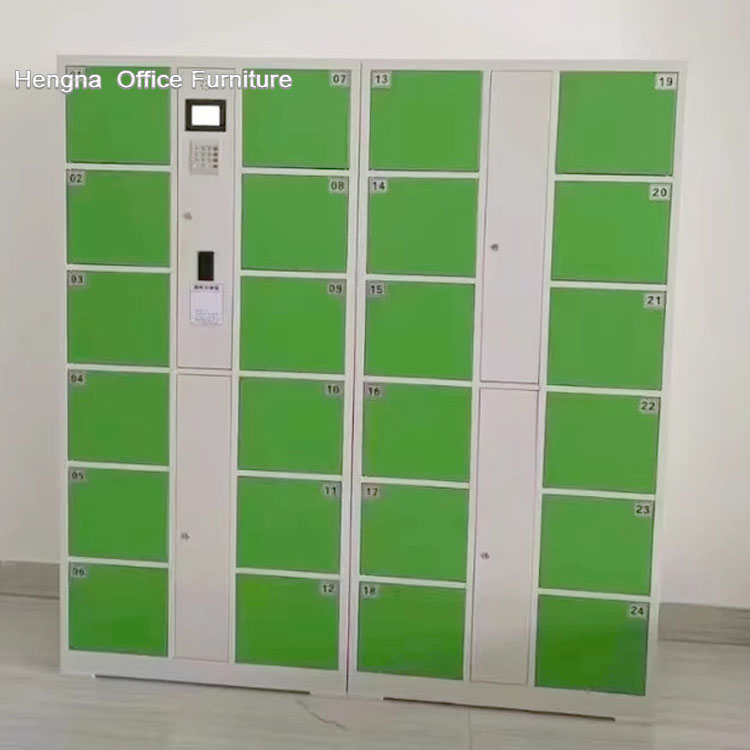
Two bodies of twelve give 24 compartments and 1700 mm of wall, which suits a compound of roughly 150 to 250 units. The number scales in twelves: 36 doors for 300 units, 48 for a large estate or a compound that also takes deliveries for a small retail parade.
The constraint is not the cabinet, it is the parcel mix. A compartment is 270 mm wide, 300 mm high and 460 mm deep. That takes a shoebox, a stack of letters, a laptop, or a bag of groceries. It does not take a mattress, a flat-pack desk, or a case of water.
Which means the compound needs a rule, not a bigger cabinet: parcels over a certain size go to the office and are signed for, everything else goes in the bank. Writing that rule down is what stops the cabinet from filling up with the two boxes nobody can collect.
The bodies and how they bolt together are set out under electronic locker systems. If the compound is not sure how many doors it needs in the first place, the four numbers worth counting are in how self-service lockers cut waiting time.
The failure that matters is the code, not the door
Doors on these cabinets are individually driven, so one failed lock costs one compartment. The recurring problem in a residential compound is different: the resident who does not receive the code, or deletes the message, and turns up at the office at nine at night.
Which is why the management side has to be able to look up a compartment by unit number and reissue a code. If that takes a call to a supplier in another time zone, the compound will go back to the pile within a month.
Couriers are the other half. A bank that requires a courier to register, download an app or wait for approval will be bypassed by lunchtime on the first day. Deposit has to take a scan and nothing else.
The courier’s three minutes
Think of the bank from the van rather than the lobby. A courier has a route, a handheld scanner and a building that takes two minutes to walk through.
- Arrival. Scan the parcel, read the door number off the screen, open that door. If the bank needs a login first, the courier stops coming.
- Deposit. Put the box in, close the door, scan the door code to confirm. The resident’s message goes out from that scan, not from the courier’s phone.
- When the bank is full. This happens on the Monday after a promotion weekend. There has to be a stated fallback — the office, a second bank, or a next-day retry — or the courier leaves the parcel on the floor in front of the cabinet.
- Oversize parcels. A compartment is 270 × 300 × 460 mm. Anything bigger does not go in, and the courier needs to know that before they carry it across the estate.
A laminated card taped inside the loading bay, with the cabinet’s phone-free instructions in the language the couriers actually read, does more for reliability than any feature in the controller.
The first week decides whether it is used
Banks get abandoned for the same reason gym memberships do: nobody explained it at the moment people first needed it. Three things, done in the first week, prevent most of the drift back to the pile.
- A notice at the gate and in the lift, with a picture of the cabinet and where it stands.
- The guard walking the first twenty residents through it, in person, on day one and day two.
- A visible pile-free lobby, so that the improvement is obvious rather than theoretical.
If the office keeps accepting parcels by hand out of habit, residents will keep handing them over. The rule and the habit have to change in the same week.
Placement and power
- Under cover, on a wall, within sight of the gate or the office. Not in an unlit car park corner.
- A metre of clear floor in front, because two residents collecting at once is the normal case, not the exception.
- One earthed socket. No network connection is required for the cabinet to store and release parcels.
- A flat floor. No plinth, no anchor bolts.
Specifications
| Item | Value |
|---|---|
| Doors | 24 in this configuration (12 / 36 / 48 available) |
| Bodies | 2 × 12 doors, bolted side by side |
| Body size | H1800 × W850 × D460 mm each |
| Single door | W270 × H300 × D460 mm |
| Access | Numeric code issued at deposit |
| Colours | White body with green, sky blue, police blue or orange-red doors |
| Power | One earthed socket |
| Network | Not required |
What the management office should decide first
- The size rule: what goes in the bank and what still goes to the office.
- Who can reissue a code, and during which hours.
- The maximum time a parcel may sit in a compartment before it is cleared.
- Whether couriers get a one-page instruction card, in the language they actually read.
None of those are product decisions, and all four decide whether the bank is still in use a year later.
The alternative approach to the same problem is set out in 36 door barcode deposit lockers.