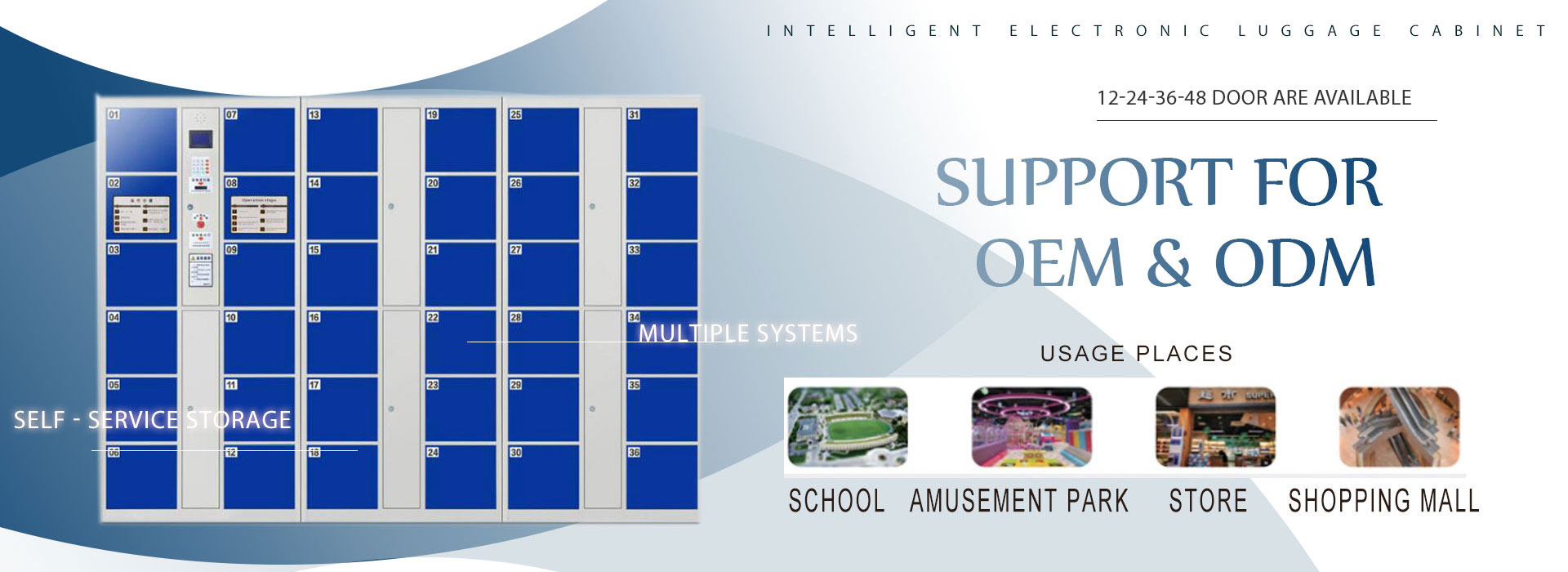
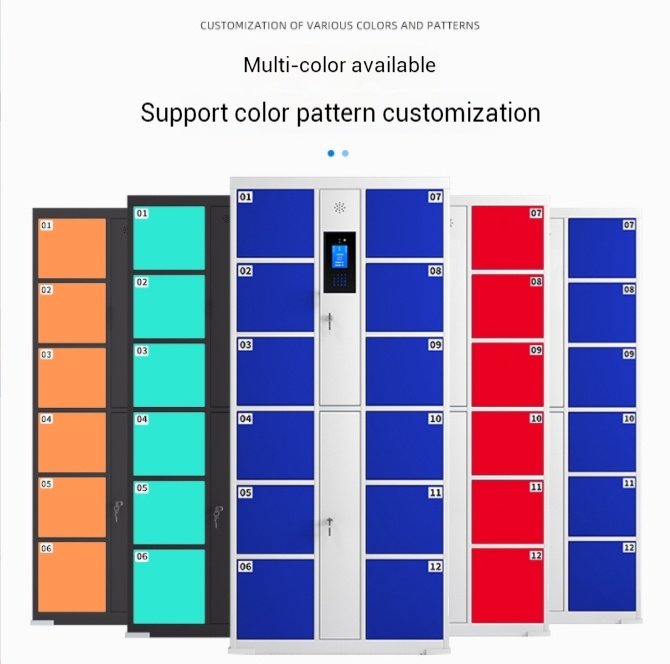
A company rebrands, paints the office, orders new chairs—and then hits the locker room: a row of gray steel cabinets that now clashes with everything else. That mismatch is why custom color digital lockers exist. The cabinets are built in the buyer’s brand color at the factory, with digital access instead of keys, and they arrive ready to match the office instead of fighting it.Custom color digital lockers are heavy-duty steel storage cabinets with keypad, RFID, barcode or fingerprint access, powder-coated in a specific color chosen at order time. They serve offices, gyms, warehouses and schools where employees store laptops, coats and personal items during the day. The color is not paint added later—it is the cabinet’s own powder coat, cured in the same production line as the standard colors.
Why Brand Colors Matter in Employee Storage
Employee storage sits in the spaces visitors see: reception-adjacent cloakrooms, open-plan office edges, gym changing rooms. Standard gray or blue cabinets read as back-of-house furniture. A cabinet in the company’s green or navy reads as part of the interior design. That matters for franchise chains, coworking operators, and corporate campuses where every visible surface is on-brand.Powder coat also outlasts paint. It is electrostatically applied and cured at high temperature, so it resists scratches from bags and carts, wipes clean with standard disinfectant, and holds its color for years under fluorescent light. Paint chips; powder coat does not chip in normal use.Facility managers also like the quiet side of the upgrade: no key log to maintain, no lock replacements when someone quits, no Monday-morning call to open a cabinet for an employee who lost a key over the weekend. Digital access moves all of that into the control board. When an employee leaves, their code or card access is removed in under a minute—the cabinet stays, the credential goes. That is the difference between a storage cabinet and a storage system.
Steel Spec: What Heavy-Duty Actually Means
The spec sheet for a heavy-duty steel storage cabinet has three numbers worth checking: door steel thickness, body steel thickness, and hinge design. Our standard is 0.8mm cold-rolled steel doors on a reinforced body, with full-length piano hinges that keep doors square after years of slamming. Thinner doors flex visibly when pressed and dent the first time a cart clips them.Inside, the cabinet should have adjustable shelves or hanging rods per the use case. Office cabinets for coats need a rod and a top shelf; cabinets for laptops and bags need two or three shelves. Door count runs from 5 to 24 per unit, and multiple units bolt together side by side to form a continuous run.
Digital Access: Which Lock Type Fits the Office
Four access types cover most workplaces:– **Self-set PIN:** the most common choice for offices. Employees set a code on first use; the front desk resets forgotten codes with a master key.
– **RFID card:** ties into existing access cards. Employees use the same card for the door and the locker. Lost cards are deactivated in the card system, no lock change needed.
– **Barcode ticket:** best for short-term or shared use—visitors, contractors, or hot-desking staff who use a locker for a day.
– **Fingerprint:** the highest tier, for areas where nobody should be able to borrow access, like server rooms, cash handling, or high-value storage.One bank can mix types: RFID for employees, barcode for visitors. The control board runs standalone on 110V power, logs every open event, and needs no network connection.
Common Configurations by Space
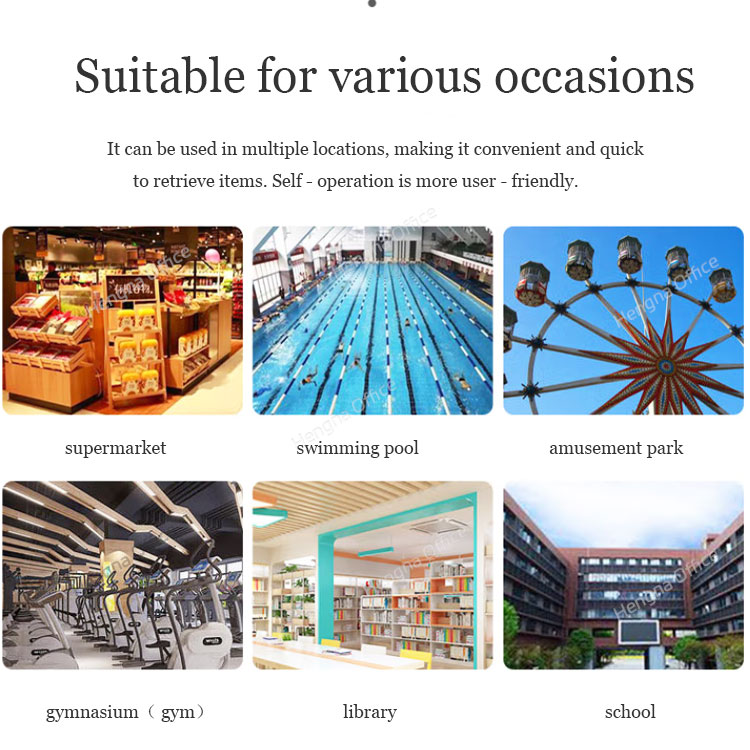
– **Open-plan office:** a 5 to 9 door unit per floor near the entrance, RFID or PIN, brand color on doors, neutral frame. Holds coats, bags and gym clothes.
– **Corporate gym:** 12 to 24 small doors, PIN access, one or two full-size doors for bulky gear. Lockers here get wet—specify the raised base.
– **Warehouse and back of house:** 9 to 24 doors, barcode access, high-traffic duty cycle. Employees come and go in shifts; shared doors with expiring tickets work better than assigned doors.
– **Hot-desking and flex offices:** a visitor-style barcode bank at the entrance, cleared nightly by the expiring-ticket rule.
Ordering Custom Colors: How It Works
Custom color ordering follows a simple flow. The buyer sends the brand color reference—RAL code, Pantone number, or a physical sample. The factory matches the powder coat and confirms the match on a swatch before production. Standard colors ship from stock; custom colors add a few days to production. Minimum order quantity for a custom color is lower than most buyers expect: one full cabinet run, not one container.The lead time for factory-direct orders runs 15 to 25 days production plus ocean freight. For multi-site rollouts—a franchise chain ordering for twenty locations—the factory holds the color formula on file, so the second order matches the first exactly, even a year later.
Installation Notes
A digital locker bank needs a grounded 110V outlet within 6 feet, a level floor, and enough clearance for doors plus passing traffic. Units ship assembled except for leveling feet and go in with two people in under an hour. Multiple units bolt together side by side; the frames are pre-drilled for linking plates, so a three-unit run sits flush and square. If the bank will live against a glass wall, confirm the weight rating of the floor area with the facilities team before ordering—a full 24-door bank weighs close to 300 pounds.
Maintenance: What Five Years Looks Like
The maintenance story is short. Daily: nothing. Weekly: a wipe-down with standard cleaner, which powder coat takes without fading. Monthly: check the error log on the control board and refill any barcode paper if the bank uses tickets. Yearly: verify door hinges and leveling feet. The electronics are sealed, and the only consumables are thermal paper rolls for barcode models. Compare that to keyed cabinets, which need lock replacements, key cutting, and a key log that someone has to own.
How Buyers Compare Suppliers
Quotes for custom color digital lockers vary less on the cabinet itself than on the details. Two suppliers can quote the same door count with a wide gap because one includes the color matching and the other charges it as an add-on, or one quotes standard colors while the other understood the custom color request. The comparison that matters: door steel thickness, color-match process and formula retention, control board warranty, lock-type flexibility, and lead time. Ask for the color swatch confirmation in writing, because that is where most order mistakes happen—not in the steel, in the color.
What to Ask a Supplier
Door steel thickness? 0.8mm minimum.
Can the color be matched from a RAL or Pantone reference? And will you hold the formula for reorders?
What lock types can be mixed in one bank?
Control board warranty? Three years is standard.
Can shelves and hanging rods be configured per compartment?
At Luoyang Hengna, we build custom color digital lockers in 5 to 24 door configurations, with PIN, RFID, barcode or fingerprint access, 0.8mm steel, and color matching from RAL or Pantone. Tell us your door count, access type, and brand color reference. We will confirm the match and quote it within one working day.