A bus station at 6 a.m. has a luggage problem and no staff to solve it. A tourist lands at an airport at midnight and wants three hours in the city without dragging a suitcase. A shopping mall runs a “no bags” campaign but has nowhere to put the bags. Every public venue hits the same wall: demand for storage is 24/7, but staffed cloakrooms are not.Barcode lockers for public venues exist to close that gap. A traveler presses one button, takes a printed ticket, stores a suitcase, and leaves. No staff, no keys, no opening hours. The machine works at 6 a.m., at midnight, on holidays, and during the busiest weekend of the year, without overtime pay.
What a Barcode Locker Does for a Public Venue
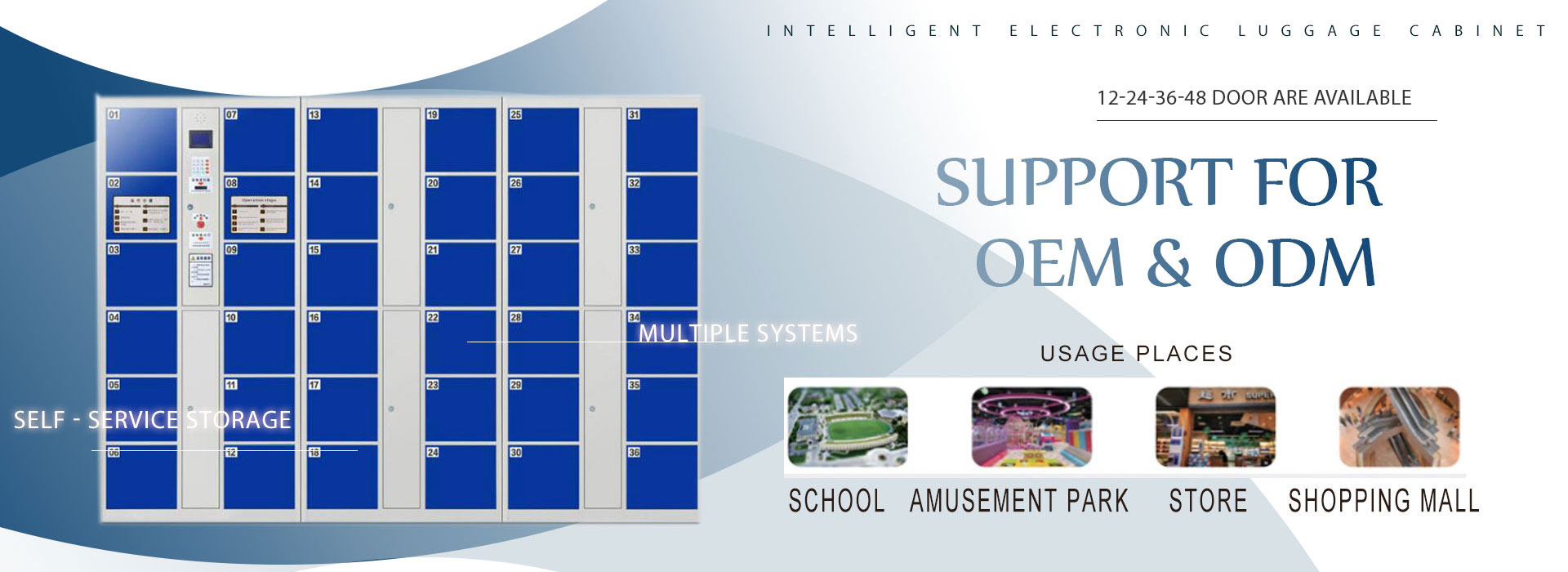
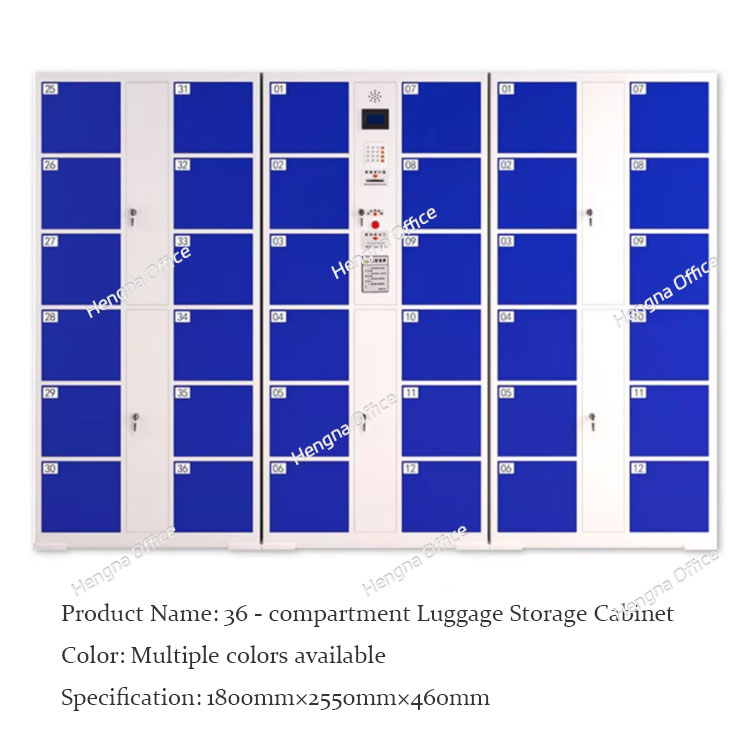
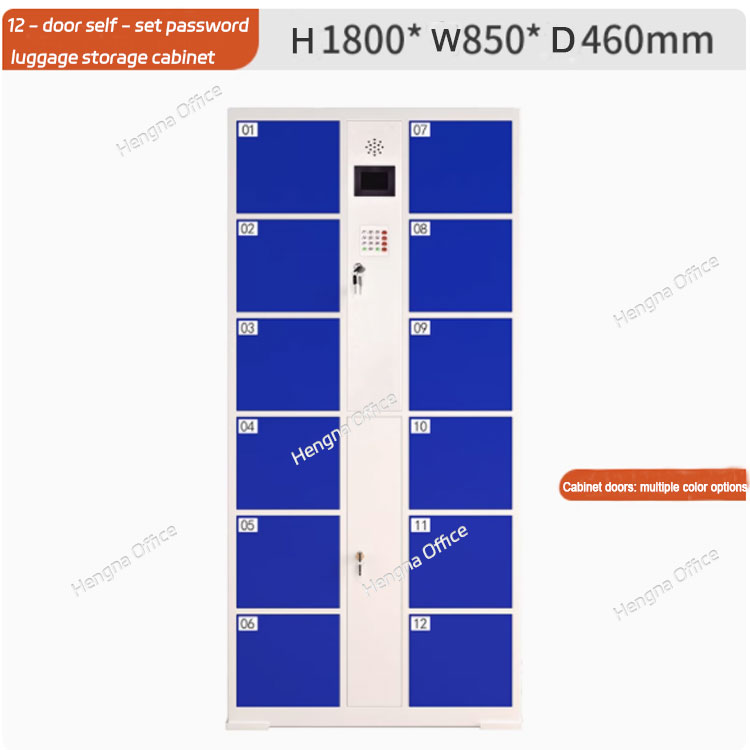
A barcode locker for public venues is a steel cabinet with 12 to 36 doors and a central ticket machine. The system runs standalone on 110V power—no network, no Wi-Fi, no IT involvement. Users press “Store,” take a single-use ticket, and claim their items by scanning the ticket at the reader. Tickets expire after a set window, usually 8 to 12 hours, so the venue clears overnight storage automatically.The control board logs every open event. When a traveler loses a ticket, staff open the door with a master key after checking the log time stamp. That is the entire staff workload: one lost-ticket resolution now and then, and refilling the thermal paper roll every few thousand uses.
Where Venues Install Them
– **Airport arrivals and departure halls.** A 36-door bank serves transit passengers who leave the airport for a few hours. Door mix matters: half the doors should fit a full-size suitcase.
– **Bus and rail stations.** A 24-door bank at the platform side catches commuters and day-trippers. These units run their busiest hour right after the last morning train.
– **Shopping malls and city centers.** A 24-door unit next to the information desk gives shoppers hands-free hours and gives the mall a reason to keep visitors longer.
– **Tourist sites and museums.** A 12-door unit at the ticket gate solves the “backpack check” problem without a staffed cloakroom.
– **Stadiums and event halls.** Temporary demand is the hardest to staff; a locker bank swallows the surge during concerts and matches.Every venue type has one thing in common: the locker bank earns its keep in the first month or simply takes pressure off staff. Some venues charge a small storage fee at a payment kiosk next to the unit. Others keep storage free and treat the lockers as a service that lengthens visits. Either model works; the machine runs on the same two resources either way—a power outlet and a thermal paper roll.
Overnight Bags and Venue Policy
Overnight storage is the one policy decision every venue must make before installation. The ticket window is configurable—most venues set 8 to 12 hours, which clears the bank nightly and matches the longest reasonable visit. Bags left past the window are opened with the master key and moved to lost property, with the control board log showing exactly when the door was last opened. Setting the policy on day one saves the service desk from inventing one later.
Why Ticket Access Wins in Public Spaces
Public venues have tried three storage models: staffed cloakrooms, coin lockers, and app-based smart lockers. Staffed cloakrooms die on labor cost—a 24/7 airport cloakroom means three shifts of payroll for a service that peaks for two hours a day. Coin lockers die on the coin—travelers arrive with cards, not change. App-based lockers die on friction—a traveler with a foreign SIM card and a dead phone battery is not downloading an app to store a bag.A printed barcode ticket has none of these failure points. It works for a 70-year-old, a 7-year-old, and a traveler who speaks no English, because the flow is two steps and the steps are printed on the panel. It also works for people who do not want to create an account anywhere. No personal data is collected, no phone number is required, nothing to sign up for—the venue stores bags without storing identities, which matters in places with strict privacy rules for public services. Venue operators pick barcode lockers for the same reason supermarkets do: adoption without explanation.
Sizing: Doors, Depth and the Suitcase Test
Two numbers decide the configuration: how many travelers pass at peak, and what they carry.– **Door count:** 12 doors for small venues and tourist sites, 24 for stations and malls, 36 for airports and interchanges. Size for the peak surge, not the daily average—a rail station’s locker demand concentrates in the 30 minutes after each train arrives.
– **Door depth:** Suitcase storage needs at least 460mm depth; carry-on bags fit 350mm. Mixed-door configurations (large doors for suitcases, small for helmets and laptops) are set at the factory, so order the mix that matches the venue’s actual luggage, not a guess.Outdoor or semi-outdoor installations—open-air bus stations, stadium gates—need a canopy or shelter over the unit and a sealed ticket printer. Rain on the scanner window is the fastest way to turn a working locker bank into a complaint line.
Public Abuse and How the Steel Handles It
Public venues are the harshest environment for any furniture. Doors get kicked. Suitcases get rammed into compartments. Someone will try to pry a door with a car key. For this environment, specify 0.8mm cold-rolled steel doors, a powder-coated finish, and recessed handles. Thinner doors flex visibly under force and advertise weakness to the next person.Powder coating also keeps the unit presentable under daily cleaning. Venue cleaning crews wipe surfaces with whatever disinfectant is on the cart; powder coat survives that. The scanner window needs a dry cloth, and the raised base keeps mop water away from the steel.Regular users also self-police. When one person slams a door, the sound carries through the concourse, and the steel shrugs it off. A unit that still looks straight after two years of public use is a quiet advertisement for the venue’s maintenance standards.Electricity draw is trivial—the control board and printer consume about as much power as a small office printer on standby. The real recurring cost is time: a daily wipe-down, a weekly check of the paper roll, and a monthly look at the error log.
Five Questions to Ask a Supplier
Door steel thickness? 0.8mm minimum for public use.
Can the door mix be customized? Suitcase doors and small doors should be configurable per unit.
Is the ticket printer sealed? Outdoor or humid placements need it.
Control board warranty? Three years is standard.
What is the lead time? Factory-direct units typically ship in 15 to 25 days plus ocean freight, and two people install one in under an hour.
Also confirm the supplier can ship spare thermal paper rolls and a spare scanner window with the first order—downtime on a public locker bank is visible to every traveler who walks past it.At Luoyang Hengna, we build barcode lockers for public venues in 12, 24 and 36 door versions, with mixed door sizes, 0.8mm steel, and a three-year control board warranty. Tell us the venue type, peak-hour traveler count, and what they carry. We will size the unit and quote it within one working day.