Most logistics companies and e-commerce platforms find that the locker itself isn’t the problem — it’s the pickup process. Barcode readers fail when a phone screen is too bright or too dim. Thermal paper jams in the middle of rush hour. QR codes get screenshot and forwarded to strangers. A single pickup takes three minutes per person, and before you know it, eight people are waiting in line. Support teams spend hours every day resetting PIN codes and tracking down missing parcels.
Face scan parcel lockers don’t solve “whether to lock the door.” They solve “who took the package and when.”
Why traditional pickup methods don’t work at scale
Barcode pickup — The customer’s phone screen is too bright. The scanner doesn’t read it. They adjust the brightness. Still no luck. The courier waits. The line grows. Then someone’s paper barcode gets wet in the rain and smudges into a blur. Now they need a manual override, which means calling support, which means the courier waits another five minutes.
PIN code pickup — The six-digit code goes to the customer’s phone by SMS. The customer opens it at the counter, types it in wrong, tries again. Meanwhile a family member saw the SMS and already knows the code. Or the customer simply forgets the code by the time they walk from their apartment to the lobby. Support resets it. They forget it again.
QR code pickup — This is the one that causes the most disputes. A customer screenshots the QR code and sends it to a colleague to pick up their package. The colleague forwards it to someone else. Before long, five people have the same QR code on their phones. Someone grabs the package. The system log only says “QR code redeemed at 14:32” — no record of whose phone scanned it, no photo, no face. The support manager has to pull CCTV footage from three different cameras to find out what happened.
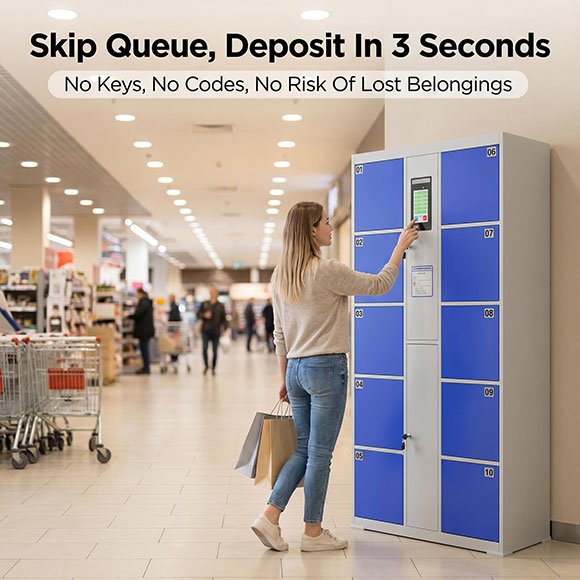
How face scan pickup changes the workflow
When the customer places an order, the system registers their facial data — either through the e-commerce app or at first pickup. From that point on, every pickup works the same way: walk to the locker, stand in front of the camera, the door opens, take the package.
No phone required. The customer’s battery can be dead. Their screen can be cracked. They can be holding a baby and a grocery bag in both hands. The scan takes less than a second.
This matters more than most people realize. In field tests across residential compounds and office buildings, the single biggest source of pickup failure isn’t technology — it’s the customer showing up without their phone, or with a phone that won’t cooperate. Face scan removes that variable entirely.
Three things logistics operators care about most
Every pickup is logged to a specific face. This is the feature that logistics managers mention first. When a package leaves a face scan locker, the system records exactly who picked it up — not “barcode redeemed,” but “Ahmed picked up parcel #4821 at 14:32 on June 15.” If a recipient claims they never received their package, you open the log. The face record is right there. No need to call security. No need to review cameras. The data is on your dashboard within three clicks.
Peak throughput doesn’t degrade. Most pickup failures happen during rush hour — between 5 PM and 8 PM, when 40-60 people arrive at the same time to grab their packages. With barcode lockers, each person spends 20-40 seconds at the screen. With face scan, the bottleneck disappears. Each door scans independently. One person per second per door. A 24-door cabinet running at full capacity clears more pickups in one hour than a comparable barcode cabinet clears in three.
Master-slave expansion keeps cost predictable. A single master cabinet — with one touchscreen, one control board, one set of electronics — can run three, four, or five sub-cabinets behind it. For a residential compound with 48 lockers, you buy one master and three sub-cabinets instead of four fully-equipped standalone units. For a 96-door deployment, you save the cost of three control systems. The savings come from the architecture, not from cheaper materials.
Smart Parcel Locker with Face Scan Contactless Pickup Specs
| Spec | Detail |
|---|---|
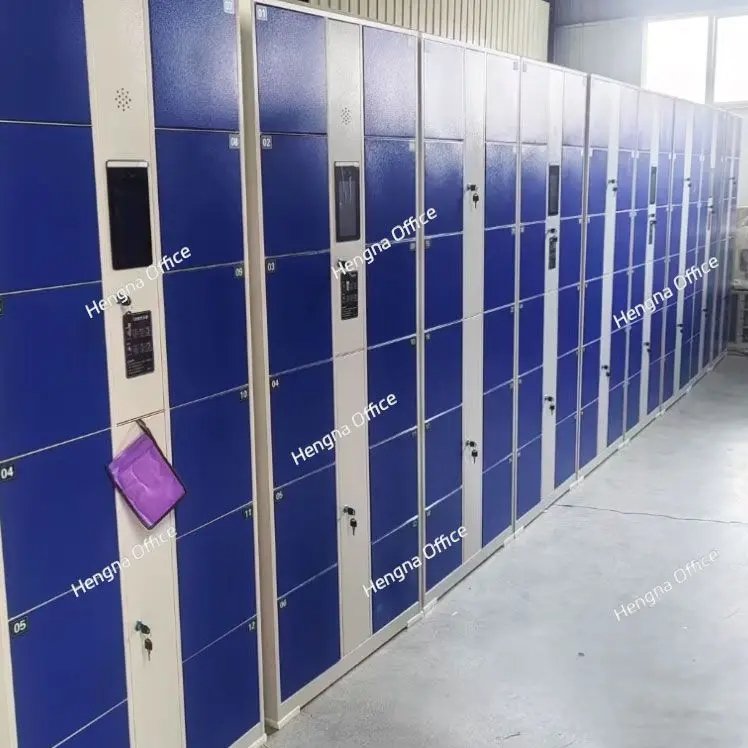
| Door options | 12 / 24 / 36 doors per cabinet |
| Cabinet size (H×W×D) | 1800 × 850-2550 × 460 mm |
| Compartment size | Standard 300×270 mm / Large 300×555 mm (fits parcels up to 400×300×250 mm) |
| Material | 0.8mm cold-rolled steel, electrostatic powder coating |
| Recognition speed | Under 1 second |
| Face profiles per cabinet | 200-500, expandable to 10,000 |
| Power supply | Standard AC, plug and play |
| Backup opening | Mechanical key override on every door |
| Working temperature | -10°C to 55°C |
| UI language | English / Arabic / custom on request |
Real deployment scenarios
E-commerce parcel pickup in residential compounds. The property management installs one master plus sub-cabinets in the lobby or near the mail room. Delivery drivers from different carriers — UPS, Aramex, local couriers — all drop packages into the same cabinet system. Residents pick up by face scan on their way home. No more “I missed the delivery, please redeliver tomorrow.” No more packages sitting at the security desk for three days.
Logistics hub self-collection points. The delivery driver scans each parcel into an empty compartment using a handheld scanner. The system sends the recipient a notification. The recipient arrives, scans their face, and the correct door opens. The entire handoff is contactless and takes under 10 seconds from arrival to departure.
Retail click-and-collect. Customers order online from a supermarket or electronics retailer. Instead of waiting at the customer service counter for an associate to find their order, they walk to a collection locker in the store, scan their face, and pick up. The retailer saves labor costs. The customer saves time.
Corporate office package management. Employee online orders used to pile up on the reception desk. The front desk spent 20-30 minutes a day sorting packages and calling employees to pick them up. With a face scan locker in the lobby, the delivery driver drops the package directly into a compartment. The employee gets a notification and picks it up whenever they walk past. No front desk involvement.
Lead time and MOQ
MOQ: 1 unit. Sample orders welcome — we can pre-configure the system with your test recipients’ face data before shipping so it works out of the box.
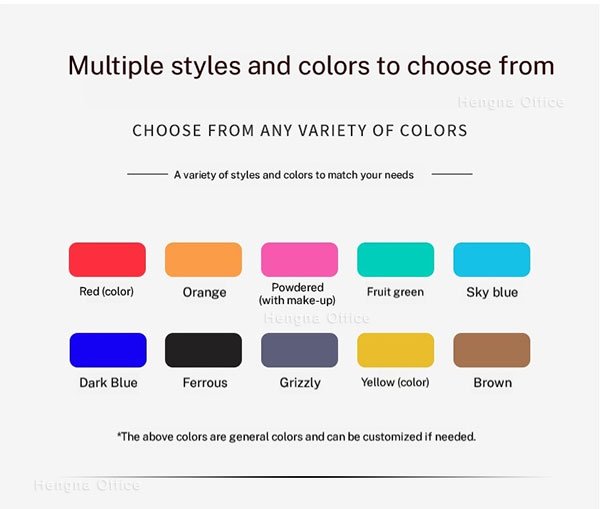
Lead time: 7-15 days for standard configurations (12-door, 24-door, and 36-door are most popular — we keep cold-rolled steel sheet stock). 20-30 days for custom color or custom UI language.
Shipping: CIF by default. FOB Qingdao also accepted. DDP door-to-door available on request.
Warranty: 1 year on the full cabinet, 2 years on the mainboard. Spare parts ship from our China warehouse within 48 hours.
What we don’t do
We are not a brokerage. We don’t list lockers from seven different factories on one page and take a margin. We make this one product line. One factory. One quality standard.
When you email us, the person who responds is the same person who places the order at the factory. In the logistics business, a supplier who takes two days to answer a simple question costs you time and money. We don’t work that way.
Ready to quote?
Send us your project spec — how many doors, what compartment size (parcel boxes or personal items), color preference, indoor or outdoor installation, and the delivery city. We respond within 24 hours with a quote PDF that includes product photos, technical specs, certification documents, and a shipping estimate to your nearest port.
For e-commerce platform procurement teams and logistics company bulk tenders, we can prepare a formal tender response package with all technical documentation within 3 working days.
Email your spec. Reply within 24 hours, including weekends.